Blogs
Laser Hair Removal Guide: How It Works, How Many Sessions, Who It Suits
Contents
- How Does Laser Hair Removal Work?
- Laser Technologies: Diode, Alexandrite, Nd:YAG
- How Many Sessions and How Far Apart?
- Does Laser Hair Removal Hurt?
- Who Is It For, and Who Should Wait?
- Before and After: A Quick Summary
- Is Laser Hair Removal Harmful?
- Laser Hair Removal for Women and Men
- Where to Start
- Frequently asked questions
Short answer: Laser hair removal works by light energy being absorbed by the pigment in the hair, turning into heat and affecting the hair follicle. Because each session only effectively targets hair in the active growth phase, you need a series; for most areas 6–8 sessions is a common range. The result is a lasting reduction in hair; new hairs can appear over time due to hormones, and occasional maintenance sessions may be needed. The best results come from the right device, individually adjusted settings and sticking to the session interval.
How Does Laser Hair Removal Work?
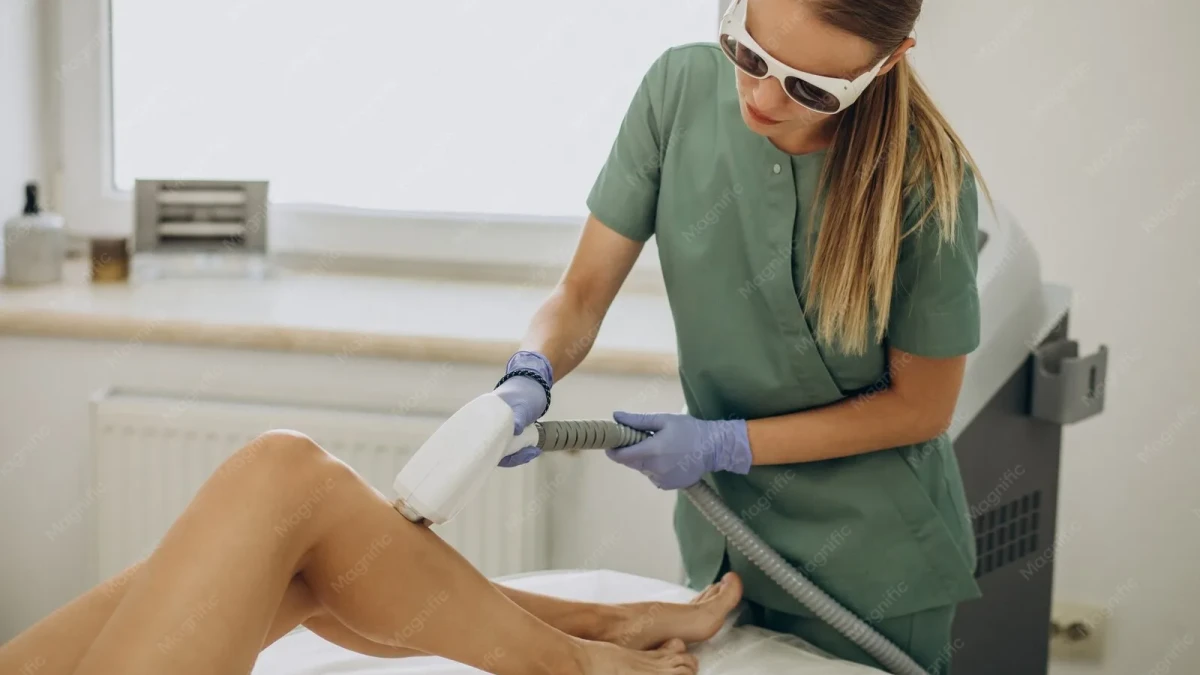
A laser device emits light at specific wavelengths. That light is absorbed by the melanin pigment in the hair, turns into heat and travels to the hair follicle. When the follicle is affected enough, its ability to produce new hair is reduced. That is why laser works best on dark, coarse hair; very light, white or red hair may respond only to a limited extent.
We explain why laser never finishes in one session in our hair growth cycle article: only part of your hair is in the active growth phase at any time, and that is the part laser affects most.
Laser Technologies: Diode, Alexandrite, Nd:YAG
| Technology | Wavelength | General characteristic |
|---|---|---|
| Alexandrite | 755 nm | Effective on fair skin and fine hair |
| Diode | 808 nm | Balanced across a wide range of skin and hair types |
| Nd:YAG | 1064 nm | Reaches deeper, allows safer settings on darker skin |
| Multi-wavelength diode | 755 + 808 + 940 + 1064 nm | Flexibility for different hair depths and skin tones in one handpiece |
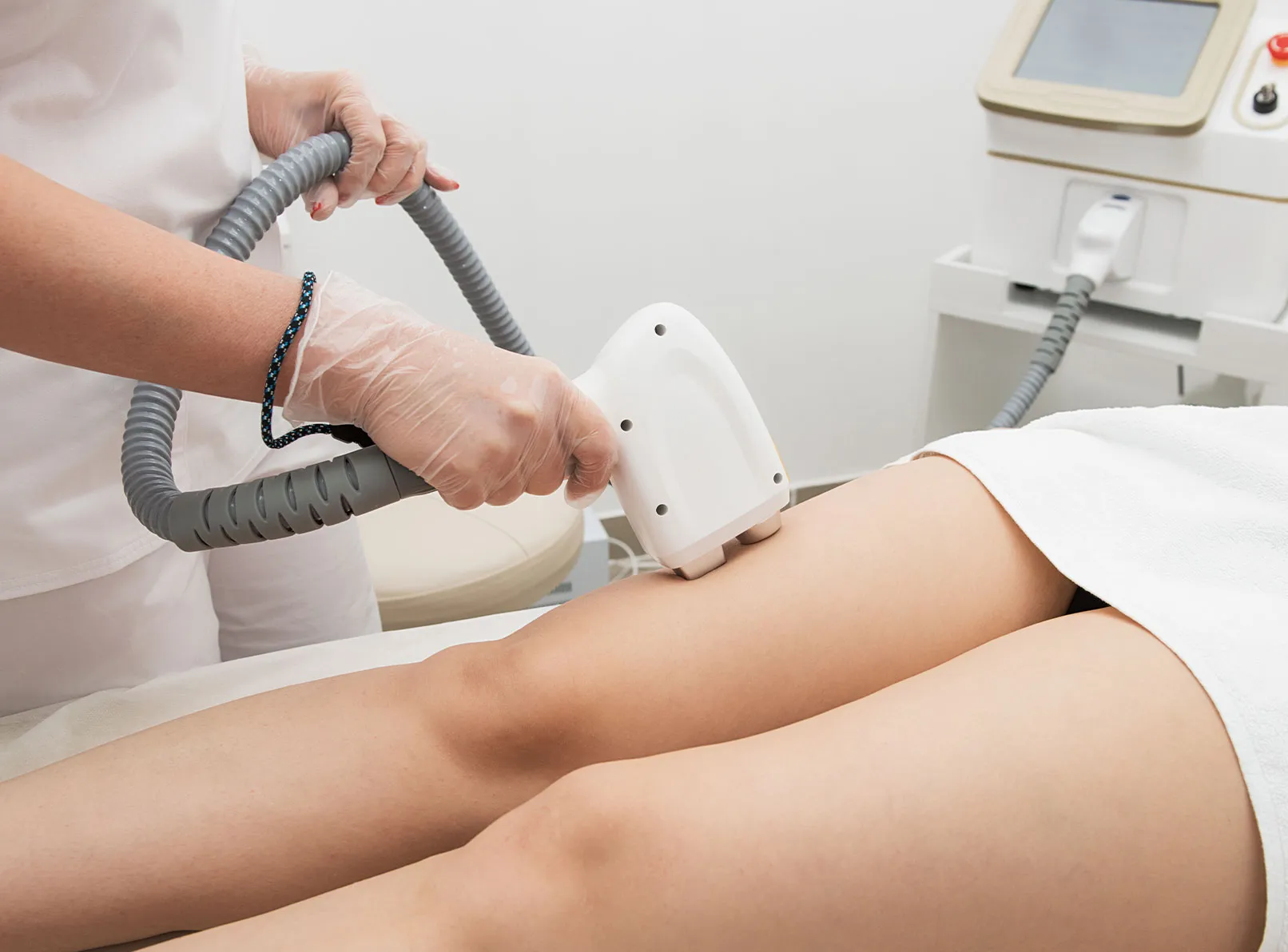
At our salon we use the Megatron 4D Diode ice laser, which combines 755, 808, 940 and 1064 nm wavelengths in a single handpiece; sapphire contact cooling keeps the skin cool throughout each pulse. For a detailed comparison of technologies, read Alexandrite vs diode, and for the difference from home devices, at-home laser device vs professional diode laser.
How Many Sessions and How Far Apart?
| Area | Usual interval | Common number of sessions |
|---|---|---|
| Face (upper lip, chin, beard line) | 4–6 weeks | can be 8 or more |
| Underarms, bikini, genital area | 5–8 weeks | 6–8 |
| Arms, legs, chest | 6–10 weeks | 6–8 |
| Back, shoulders, full body | 8–10 weeks | 6–8 |
The exact number depends on hair density, hair colour, skin tone and hormones. Booking sessions closer together does not speed things up.
Does Laser Hair Removal Hurt?
With cooled diode lasers most people describe a brief snap, like a rubber band. It is stronger in early sessions, when hair is dense, and in sensitive areas such as the underarms and bikini line, and it fades as sessions progress. See does laser hair removal hurt for an area-by-area guide.
Who Is It For, and Who Should Wait?
- Usually suitable: women and men with dark or medium-toned hair; with the right wavelength and settings, darker skin can be suitable too.
- Results may be limited: very light blonde, white, grey or red hair.
- Should postpone: pregnancy, active infection or open wounds in the area, recently tanned skin and some photosensitising medications. For pregnancy, see beauty treatments during pregnancy.
- Should see a doctor first: suspected hormonal hair growth (for example polycystic ovary syndrome), or new or rapidly increasing hair growth.
Before and After: A Quick Summary
- Stop waxing, tweezing and epilating at least 3–4 weeks before your first session; shave only. See switching from waxing to laser.
- Shave 12–24 hours before your session, and avoid strong sun and sunbeds for at least two weeks.
- For 24 hours afterwards, avoid hot showers, saunas, hammams and intense exercise; use high-SPF sunscreen if you will be in the sun.
All the rules, and a detailed answer to “what should I do after a session?”, are in our laser hair removal before and after guide. If you are wondering about hair shedding in the weeks after a session, read shedding after laser hair removal.
Is Laser Hair Removal Harmful?
With the right device, the right settings and the rules followed, laser hair removal is generally considered safe. The most common side effects are temporary redness and small bumps around the follicles. On tanned skin or with the wrong settings, the risk of pigmentation changes and burns increases, which is why the patch test and sun rules matter. We cover this in is laser hair removal harmful.
Laser Hair Removal for Women and Men
Women most often choose the underarms, legs, bikini line and face; men the beard line, back, shoulders and nape. Male hair is usually coarser and denser, so settings and session plans differ. For areas and details, see female laser hair removal and male laser hair removal, and all options on our laser hair removal page.
Where to Start
The easiest way to see how many sessions you need and which settings suit you is a free hair analysis and patch test. For our salon and the process, see laser hair removal in Şişli.
This content is for general information and does not replace medical advice. If you suspect hormonal hair growth, consult your doctor. Results may vary from person to person.
Frequently Asked Questions
Answers to the most frequently asked questions about this content
How does laser hair removal work?
Laser light is absorbed by the pigment in the hair, turns into heat and affects the hair follicle, reducing its ability to produce new hair.
How many sessions does laser hair removal take?
For most areas 6–8 sessions is a common range; the face may need more. Your exact plan is set at the hair analysis.
Is laser hair removal permanent?
Laser gives a lasting reduction in hair. New hairs can appear over time due to hormones, and one or two maintenance sessions a year may be needed.
Does laser hair removal hurt?
With cooled diode lasers it is usually described as a brief snap. It is stronger in early sessions and sensitive areas, and fades as sessions progress.
Can laser be used on darker skin?
Yes, with the right wavelength and settings. The 1064 nm wavelength allows safer settings on darker skin; suitability is checked with a patch test.
Who should postpone laser hair removal?
Pregnant women, anyone with an infection or open wound in the area, recently tanned skin or photosensitising medication should postpone. With suspected hormonal hair growth, see a doctor first.