


Blogs
Alexandrite or Diode? Comparing Laser Hair Removal Technologies
Short answer: the alexandrite laser (755 nm) is the wavelength melanin absorbs most strongly, so it works very well on light to olive skin with fine-to-medium dark hair, but carries more risk on darker skin. The diode laser (808 nm) penetrates deeper and is used safely across a wider range of skin tones. 1064 nm (Nd:YAG) is the safest option for brown and dark skin. Today's multi-wavelength diode systems combine these in a single handpiece, turning “which one?” into a personal setting.
Why Wavelength Matters So Much
In laser hair removal, wavelength decides two things: how deep the light travels and how strongly melanin (the pigment in hair and skin) absorbs it. Shorter wavelengths are absorbed more by melanin, which is good for targeting hair but means skin pigment absorbs energy too. Longer wavelengths go deeper and affect skin pigment less, which is why they are safer on darker skin.
The Three Core Technologies
Alexandrite (755 nm)
Its high affinity for melanin makes it effective on fine and medium dark hair. It gives good results on the face, arms and legs in people with lighter skin. On dark or tanned skin, the skin's own pigment also absorbs energy, raising the risk of burns and pigment changes.
Diode (808 nm and 940 nm)
It goes deeper than alexandrite with slightly lower melanin affinity. That balance makes it the most versatile wavelength, used safely on medium-to-thick hair across light to olive skin. 940 nm adds support for deep-rooted, coarse hair such as underarms, bikini line and men's chest.
Nd:YAG (1064 nm)
The deepest-reaching wavelength and the least affected by skin pigment. It is the safe choice for brown and dark skin, and for deep, coarse hair. Used alone, its effect on fine hair can be limited.
Comparison Table
| Alexandrite 755 nm | Diode 808 / 940 nm | Nd:YAG 1064 nm | |
|---|---|---|---|
| Melanin affinity | Very high | High | Low |
| Depth | Shallow-medium | Medium-deep | Deep |
| Best skin tone | Light, olive | Light to brown | Brown, dark |
| Best hair | Fine-medium, dark | Medium-coarse | Coarse, deep-rooted |
| Risk on dark skin | High | Medium | Low |
What Four-Wavelength Diode Systems Add
With a single-wavelength device, the specialist has to treat every hair and skin type with one kind of light. Multi-wavelength systems blend 755, 808, 940 and 1064 nm in the same pulse at adjustable ratios. That lets you combine the alexandrite effect on fine hair with the deep, dark-skin-safe 1064 nm effect.
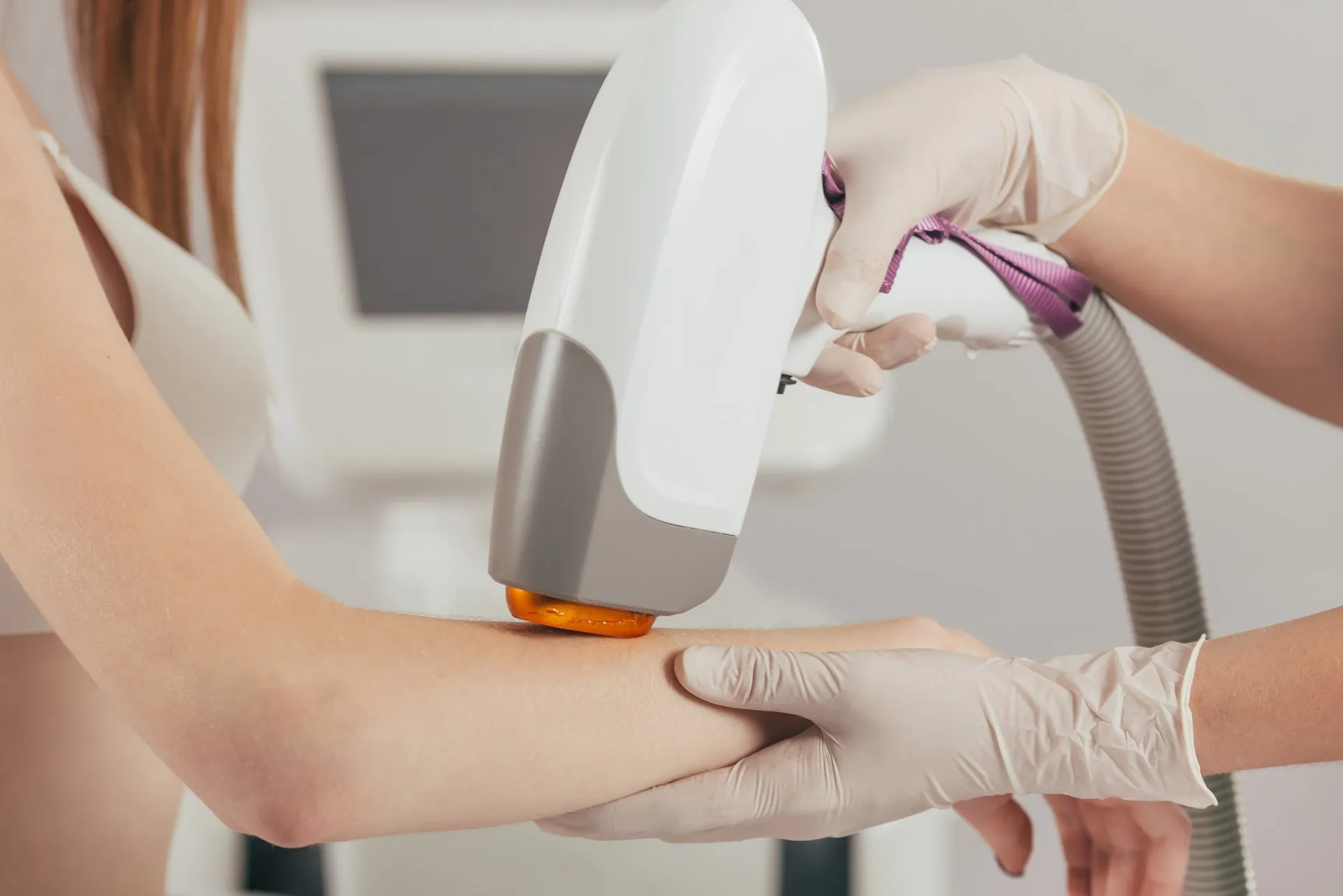
The Megatron 4D Diode we use in our Şişli salon offers all four wavelengths in one sapphire-cooled handpiece. We set the ratios after a hair and skin analysis at your first visit.
Which Technology Suits Whom?
- Light skin, fine dark hair (face, arms): alexandrite-weighted setting.
- Olive skin, medium-coarse hair (legs, underarms): diode-weighted setting.
- Brown or dark skin: 1064 nm-weighted setting with little alexandrite.
- Men's thick beard, chest and back hair: diode with 940 and 1064 nm support.
- Blonde, red or white hair: no laser is fully effective because there is little pigment; we set expectations during the analysis.
What Do “Ice Laser” and “FDA-Approved” Mean?
“Ice laser” is not a technology but a marketing term for a handpiece that cools the skin, usually on diode systems. When comparing salons, asking about wavelengths, cooling type, spot size and the specialist's experience tells you more than any slogan. Curious about comfort? Read does laser hair removal hurt?
Does the Number of Sessions Depend on the Technology?
Hair density, the area, hormones and keeping to the schedule matter more than the technology. With the right wavelength and energy, 6–8 sessions is common for most areas; the wrong setting increases both sessions and risk.
Personalised Wavelength Settings in Şişli, Istanbul
An analysis and patch test show which wavelength suits you. At our salon on Abide-i Hürriyet Avenue we set your treatment after a hair and skin analysis, in English if you prefer. Explore women's and men's laser hair removal or get in touch.
This content by Renew & Revive is for general information only and is not medical advice. Suitability and results vary with skin type, hair characteristics and hormonal factors. Please consult a doctor about any health concerns. Our centre provides beauty and care services.
Frequently Asked Questions
Answers to the most frequently asked questions about this content
Is alexandrite or diode laser better?
There is no single best. Alexandrite is strong on light skin with fine-to-medium dark hair; diode works safely across a wider range of skin tones. Multi-wavelength systems combine both for each person.
Which laser is best for darker skin?
For brown and dark skin, a 1064 nm (Nd:YAG)-weighted setting is the safest option, with little alexandrite.
Is ice laser the same as diode laser?
“Ice laser” is usually a marketing term for diode systems with contact cooling. What really matters are the wavelengths, cooling type and the specialist's experience.
Does any laser work on blonde or white hair?
No laser is fully effective on blonde, red or white hair because it has little pigment. Expectations should be set during a hair analysis.
