
Blogs
At-Home Laser Device or Professional Diode Laser? The Real Differences
Contents
- What Do At-Home Devices Actually Do?
- What Does a Professional Diode Laser Do Differently?
- Side-by-Side Comparison
- When an At-Home Device Can Make Sense
- When to Choose Professional Sessions
- Safety Rules If You Use a Home Device
- Can You Combine the Two?
- Free Analysis Before You Decide
- Frequently asked questions
Short answer: most at-home “laser” devices are actually IPL (intense pulsed light) and run at low energy for safety. With regular use they can thin and reduce hair, but you have to keep using them to maintain the effect. A professional diode laser works at specific wavelengths with much higher, adjustable energy and contact cooling, so it reaches the follicle deeper and more precisely. Which one suits you depends on the area, your hair type and what you expect.
This guide compares the two without taking sides and explains when each makes sense.
What Do At-Home Devices Actually Do?
Most devices sold as “laser hair removal” for home use emit broad-spectrum light (IPL). The light hits the hair pigment and turns into heat, but the energy is capped at a level that is safe to apply yourself. As a result the follicle is usually not fully disabled; growth slows and hair becomes finer.
The few genuine at-home diode devices have very small treatment windows, so treating a large area such as the legs can take hours.
What Does a Professional Diode Laser Do Differently?
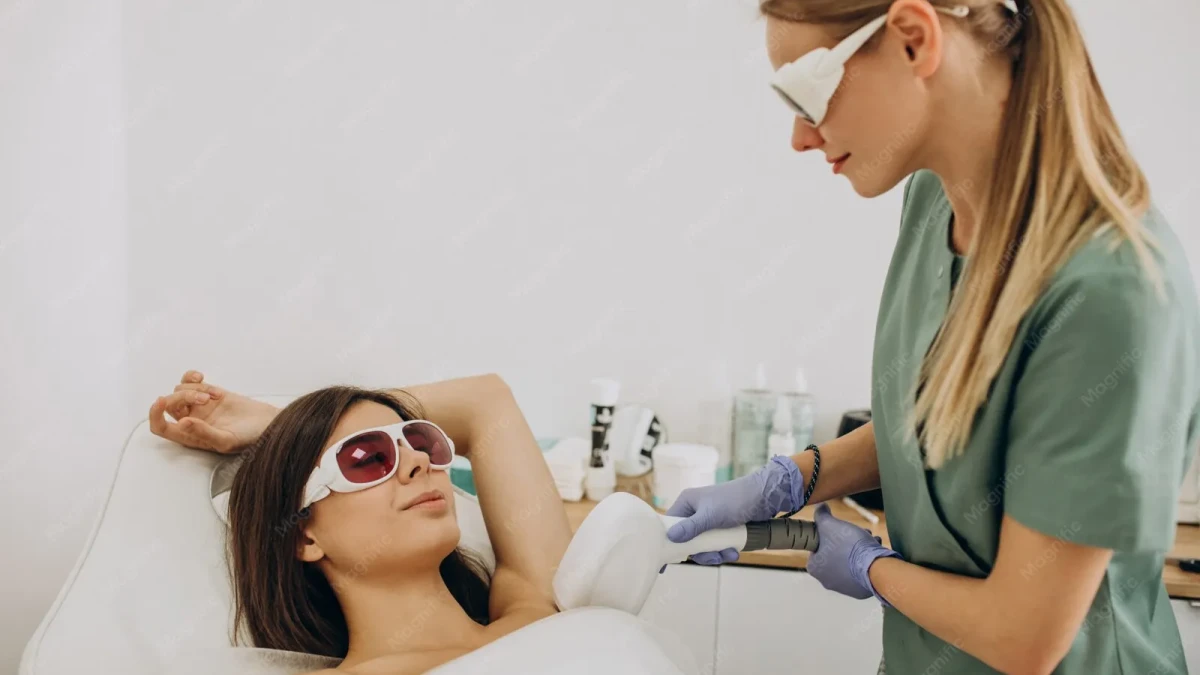
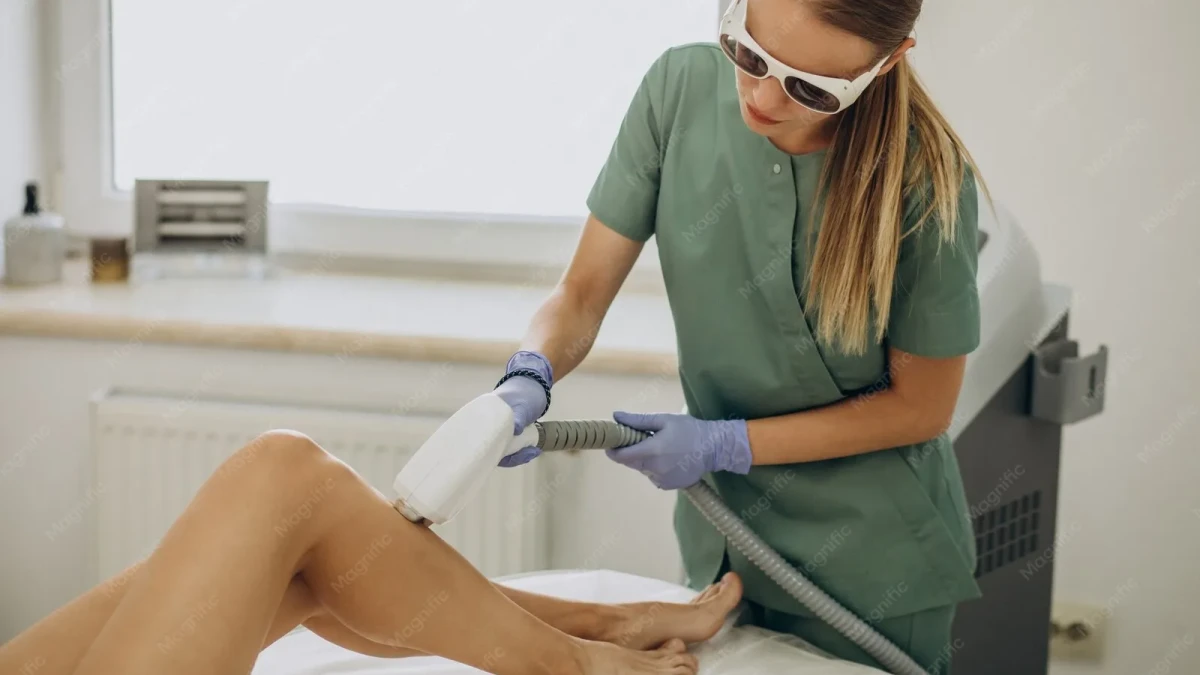
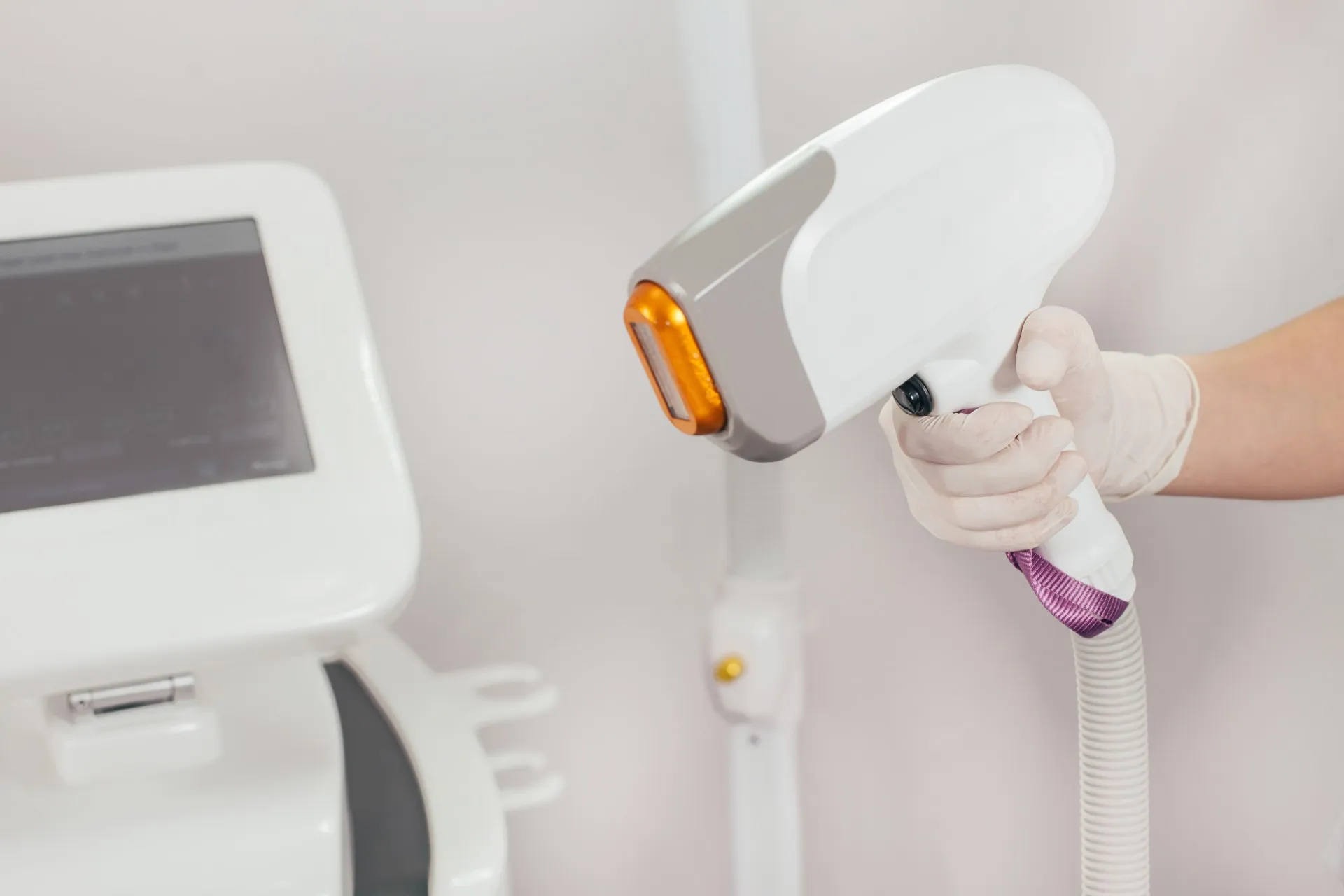
Professional diode systems work at defined wavelengths (for example 755, 808, 940 and 1064 nm). Each wavelength responds better to hair at a different depth and thickness. Energy, pulse duration and frequency are set by a trained specialist for your hair type and skin tone. The handpiece cools the skin it touches continuously, so high energy reaches the root without overheating the surface.
The Megatron 4D Diode we use in our salon combines these four wavelengths in one handpiece with sapphire contact cooling.
Side-by-Side Comparison
| At-home device (mostly IPL) | Professional diode laser | |
|---|---|---|
| Light type | Broad-spectrum light | Specific wavelengths (laser) |
| Energy | Low, fixed levels | High, set for each person |
| Cooling | Usually none or limited | Continuous contact cooling |
| Skin tone | Most cannot be used on darker skin | 1064 nm allows treatment of darker skin |
| Who applies it | You | A trained specialist |
| Keeping results | Ongoing regular use | Occasional touch-ups after the plan |
| Hard-to-reach areas (back, genital) | Difficult on your own | Easy for a specialist |
When an At-Home Device Can Make Sense
- You have light-to-medium skin with dark hair and want to maintain a small area such as the lower legs yourself.
- You have finished professional sessions and want to keep occasional fine regrowth under control (ask your specialist first).
- You have the time and patience to follow the instructions exactly.
When to Choose Professional Sessions
- Sensitive areas: genital, bikini, underarms or face.
- Areas you cannot reach, such as the back and shoulders.
- Olive, brown or darker skin tones.
- Thick, dense hair, especially in men.
- Suspected hormonal hair growth (PCOS, hirsutism), which also needs a doctor's assessment.
Safety Rules If You Use a Home Device
- Never bypass the skin-tone sensor; the burn risk on darker skin is high.
- Do not treat over moles, tattoos or permanent make-up.
- Do not use it on tanned skin, and wear sunscreen afterwards.
- Check with your doctor if you take photosensitising medication.
- Never use it around the eyes.
Can You Combine the Two?
Using a home device during a course of professional sessions is not recommended. Between sessions, a razor is the only tool you should use, so the hair cycle can be tracked and the skin can rest. If you are thinking about a home device for occasional regrowth after your plan ends, decide together with your specialist.
Free Analysis Before You Decide
A hair and skin analysis is the best way to see which option suits you. At our salon on Abide-i Hürriyet Avenue in Şişli, Istanbul, we review your hair type, skin tone and goals with you in English and do a patch test if needed. See our laser hair removal services, read does laser hair removal hurt? or get in touch.
This content by Renew & Revive is for general information only, is not medical advice and does not target any device brand. Follow the manufacturer's instructions when using a home device. Please consult a doctor about any health concerns. Our centre provides beauty and care services.
Frequently Asked Questions
Answers to the most frequently asked questions about this content
Do at-home laser devices give permanent results?
Most home devices are low-energy IPL. They thin and reduce hair, but you need to keep using them to maintain the effect. A professional diode laser reaches the follicle with higher, adjustable energy.
Can people with darker skin use a home device?
Most home devices should not be used on darker skin because of the burn risk. On professional systems, the 1064 nm wavelength allows controlled treatment of darker skin tones.
Can I use home IPL between professional sessions?
It is not recommended. Use only a razor between sessions; a home device disrupts tracking of the hair cycle and stresses the skin unnecessarily.
Which areas really need professional sessions?
Sensitive or hard-to-reach areas such as the genital and bikini area, underarms, face and back are safer and more effectively treated by a specialist.