Blogs
What Is Ice Laser Hair Removal? A Guide to Smart Diode Ice Laser

Contents
Short answer: Ice laser hair removal is diode laser hair removal combined with a handpiece that cools the skin surface during each pulse. The “ice” refers to that cooling system, not the laser itself. Cooling protects the skin and makes treatment more comfortable; most people describe a brief snap and some warmth. Because the laser targets pigment in the hair root, it works best on dark hair, and six to eight sessions is a common range for most areas.
What Is Ice Laser?
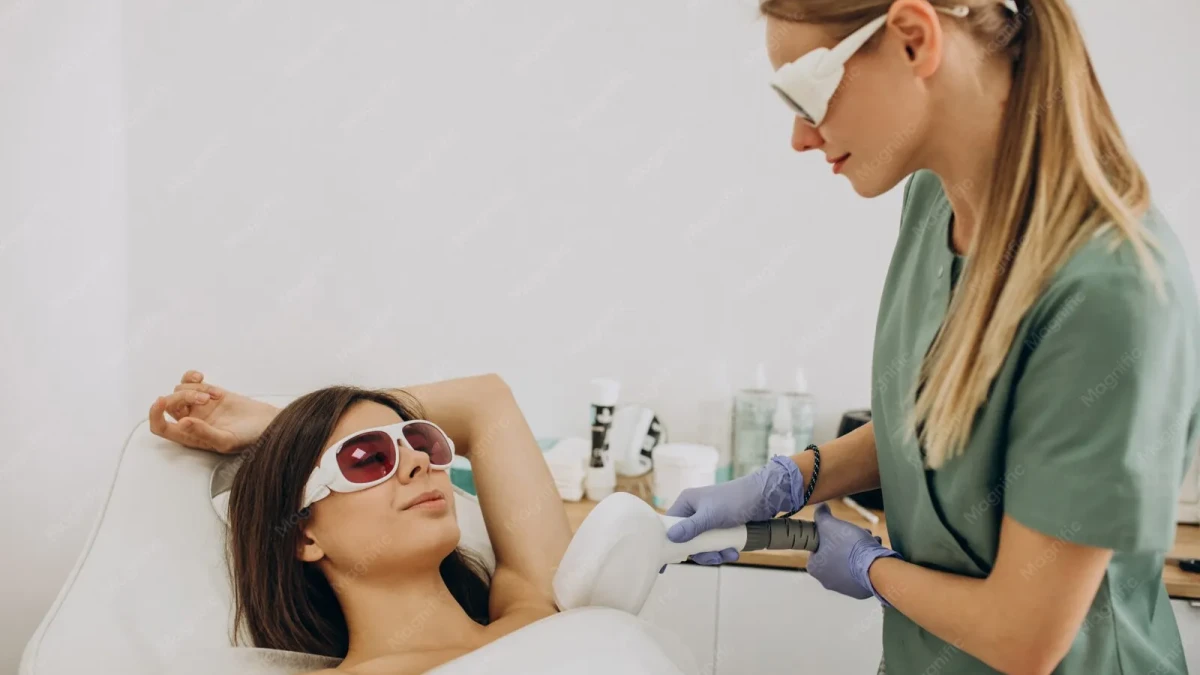
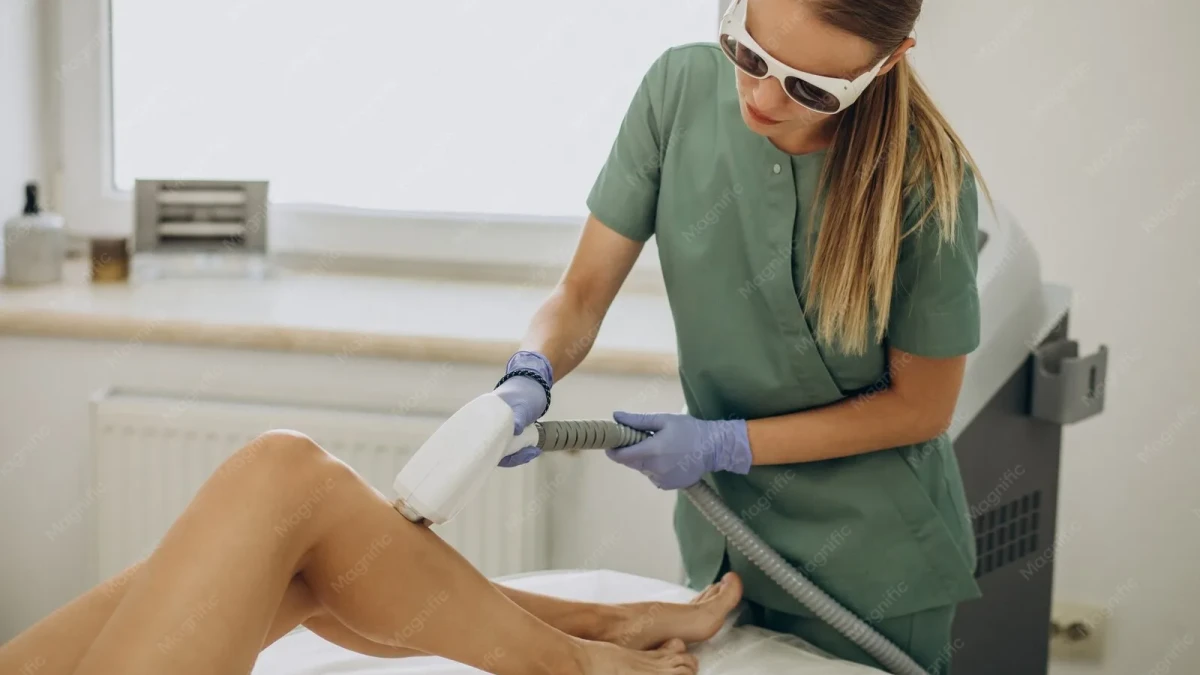
What people call “ice laser” is technically a diode laser treatment. The difference is that the part of the handpiece touching the skin is continuously cooled. That cold contact stops the top layer of skin from overheating while the light travels to the hair root. Names like “Smart Diode ice laser” or “diode ice laser” describe the same principle.
How Does It Work?
- Light finds pigment: the laser light is absorbed by melanin in the hair root.
- It turns into heat: the absorbed energy becomes heat and damages the structures that produce the hair.
- The skin is protected: the cooled handpiece keeps the skin surface cool, lowering the risk of irritation and burns.
- Hair weakens: each session affects hairs in their active growth phase; over time hair becomes sparser and finer.
Because not all hairs are in the growth phase at the same time, one session is not enough; sessions are repeated at intervals.
Why Wavelength Matters
Different wavelengths suit different hair and skin types. The Megatron 4D Diode ice laser we use combines 755, 808, 940 and 1064 nm in one handpiece:
| Wavelength | Usually an advantage for |
|---|---|
| 755 nm | Fine, lighter hair and fair skin |
| 808 nm | Medium hair; the most widely used diode wavelength |
| 940 nm | Coarse hair, olive and darker skin |
| 1064 nm | Deep-rooted hair, a safer range on dark skin |
The device's cooling system combines semiconductor cooling, a sapphire contact handpiece and supporting cooling components. We explain why longer wavelengths matter on darker skin in laser hair removal for darker skin, and the limits on light hair in laser on blonde, red or white hair.
Does Ice Laser Hurt?
Thanks to cooling, most people describe it as a brief snap, like a rubber band, followed by warmth that fades. How it feels depends on the area, hair density and your sensitivity. Bony areas and dense hair (upper lip, underarms, intimate area) can feel stronger. Early sessions feel more noticeable because hair is denser; later ones are milder. See does laser hair removal hurt for an area-by-area guide.
How Many Sessions?
Six to eight sessions is common for most areas. The exact number depends on the area, hair colour and thickness, skin type and hormones. Facial sessions are closer together; body sessions are spaced further apart. After the plan, a few top-ups a year may be needed, especially in hormone-sensitive areas.
Can You Have Ice Laser in Summer?
With a cooled diode laser, sessions can continue in summer, but that does not mean the sun can be ignored. Sessions are postponed on freshly tanned skin, you should avoid strong sun for at least two weeks before, and you should apply a high-SPF sunscreen to treated areas afterwards.
Advantages and Limits
| Advantages | Limits |
|---|---|
| More comfortable thanks to cooling | Limited effect on white, grey and very light hair |
| Several wavelengths for a wide range of skin and hair | No result in a single session; regular sessions needed |
| Quick on large areas | Top-ups may be needed for hormonal hair |
| Reduces ingrown hairs caused by waxing and shaving | Postponed on tanned skin and with some medications |
When to Postpone
Pregnancy, an active infection or open wound in the area, recently tanned skin and certain photosensitising medications may mean waiting. If hormonal hair growth is suspected (PCOS, hirsutism), a doctor's assessment is recommended before starting.
Before and After
- Shave with a razor 12–24 hours before; no waxing, tweezing or epilators.
- Avoid strong sun and sunbeds for at least two weeks before.
- For 24 hours afterwards, skip hot showers, saunas, hammams and intense exercise.
- Moisturise and use a high-SPF sunscreen if you will be in the sun.
- Pause exfoliants and irritating products for a few days after.
Wondering about home devices? Read at-home laser vs professional diode laser, and for technologies compared, Alexandrite vs diode laser.
Ice Laser Hair Removal in Şişli
Every plan at our salon starts with a free hair analysis and patch test. For all areas for women and men and directions, see laser hair removal in Şişli.
This content is for general information and is not medical advice. Results vary with skin type, hair type and hormonal factors. Our salon offers beauty and care services, not medical procedures.
Frequently Asked Questions
Answers to the most frequently asked questions about this content
What is ice laser hair removal?
Ice laser is diode laser hair removal combined with a handpiece that cools the skin surface during each pulse. The “ice” comes from this cooling system.
Does ice laser hurt?
Thanks to cooling, most people describe a brief snap and warmth. It varies by area and hair density; early sessions feel stronger, later ones milder.
How many ice laser sessions are needed?
Six to eight sessions is common for most areas. The exact number depends on the area, hair type, skin type and hormones.
Can I have ice laser in summer?
Yes, but sessions are postponed on freshly tanned skin, you should avoid strong sun beforehand and use a high-SPF sunscreen afterwards.
Does ice laser work on white hair?
No. Laser targets pigment in the hair, so lasting results are not expected on white or grey hair, and the effect on very light hair is limited.
Is ice laser the same as diode laser?
Yes. Ice laser is a diode laser treatment with a cooled handpiece; the difference is the cooling system that keeps the skin surface cool during each pulse.