Blogs
Laser Hair Removal for Darker Skin Tones: Why 1064 nm Matters

Contents
Short answer: Yes, laser hair removal can be done on olive, brown and dark skin. But because darker skin contains more pigment that competes with the hair for laser light, device choice and settings matter far more. This is where the long 1064 nm wavelength stands out: it reaches deeper, is absorbed less by pigment in the top layer of the skin and so offers a safer working range on darker skin. With the right device, cautious settings, good cooling and a patient session plan, darker skin can get good results too.
Why Darker Skin Needs More Care
Laser hair removal works by targeting melanin in the hair root. The catch is that melanin is not only in the hair; it is also in the top layer of the skin. On light skin, most of the light goes to the dark hair. On darker skin, the pigment in the skin also tries to absorb that light. With the wrong settings, this raises the risk of heating, redness, crusting and temporary changes in skin colour (darkening or lightening).
So the question is not “can I have laser on dark skin?” but “with which device and which settings?”
Fitzpatrick Skin Types
The Fitzpatrick scale is the most common way to classify skin colour and how it reacts to the sun. It is used as a starting point for laser settings.
| Type | General description | Sun reaction | Laser approach |
|---|---|---|---|
| I | Very fair | Always burns, never tans | Short and medium wavelengths usually suitable |
| II | Fair | Burns easily, tans poorly | Short and medium wavelengths usually suitable |
| III | Light olive | Sometimes burns, tans | Medium wavelengths, careful settings |
| IV | Olive / light brown | Rarely burns, tans easily | Longer wavelengths come first |
| V | Brown | Very rarely burns | Long wavelength (1064 nm), conservative settings |
| VI | Dark brown to black | Never burns | Long wavelength (1064 nm), conservative settings |
Types III and IV are very common in Turkey. A type III who has tanned over the summer can temporarily behave like a type IV, so the assessment is based on your skin colour on the day.
Why 1064 nm Makes a Difference
As the wavelength gets longer, it is absorbed less by melanin and travels deeper into tissue. That has two effects:
- The top layer of skin heats less: pigment in the skin absorbs a smaller share of the light, lowering the risk of burns and colour change.
- It reaches deep roots: for coarse, deep-rooted hair (men's beards, legs, intimate areas) more energy reaches the root.
There is a trade-off: because melanin absorbs it less, 1064 nm alone is weaker on fine, light hair. The ideal is being able to choose or combine wavelengths according to skin and hair type.
The Device We Use
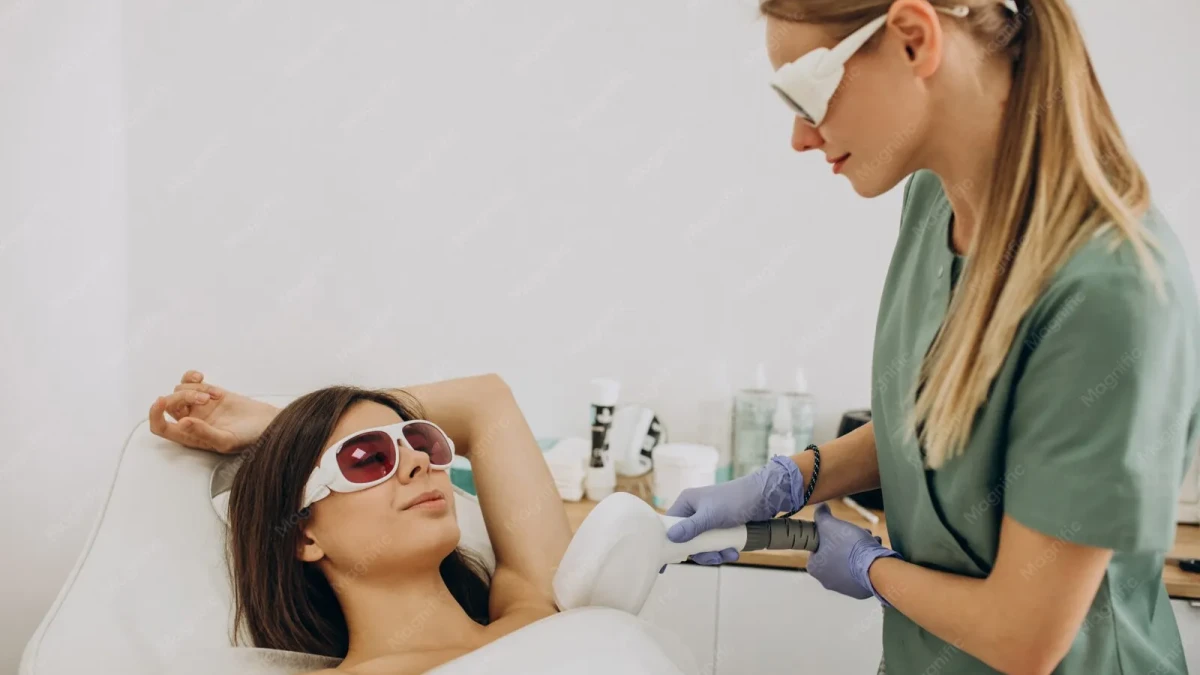
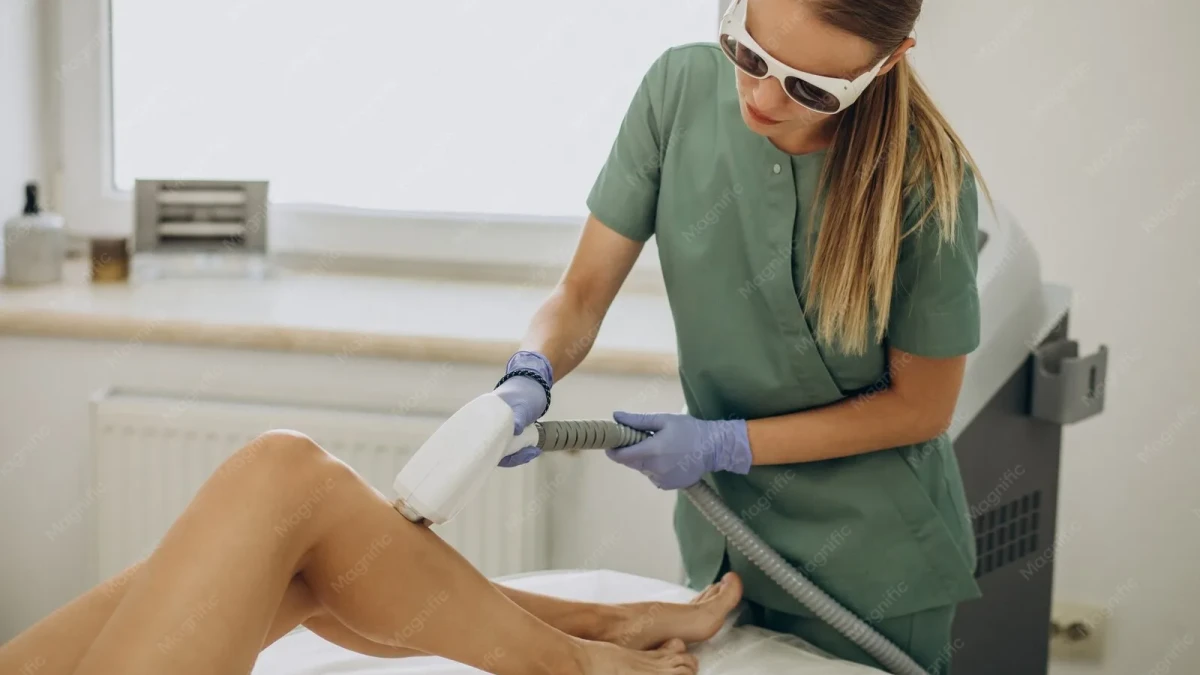
Our Megatron 4D Diode ice laser combines 755, 808, 940 and 1064 nm in one handpiece. On fair skin with fine hair we can lean on 755 nm, on medium skin and hair 808 nm, and on olive and darker skin 940 and 1064 nm. Sapphire contact cooling keeps the skin surface cool during each pulse, which adds protection on darker skin in particular.
In Alexandrite vs diode laser we also explain why a 755 nm Alexandrite laser has to be used carefully on darker skin.
How the Plan Changes on Darker Skin
- A patch test is essential: it shows how your skin reacts to the chosen settings.
- Settings start conservative: energy is kept cautious in early sessions and raised step by step based on how your skin responds.
- It may take a few more sessions: safe settings can mean working with lower energy, which means a slightly longer road to the result.
- Intervals are respected: more frequent sessions do not mean faster results; spacing matters for both skin and the hair cycle.
Before and After: Extra Notes for Darker Skin
- Do not tan: avoid strong sun, sunbeds and self-tanners for at least two weeks before a session. Tanned skin moves you up a risk level.
- Shave, do not pull: shave with a razor 12–24 hours before; no waxing or tweezing.
- Pause irritating products: stop acids and retinol for a few days before and after.
- Sun protection is a must: apply high-SPF sunscreen to treated areas afterwards; on darker skin it is the most effective way to reduce marks and pigmentation.
- Avoid heat: skip hot showers, saunas, hammams and intense exercise for 24 hours.
When to Wait
Freshly tanned skin, active spots or irritation in the area, photosensitising medication and pregnancy may mean postponing laser. Dark marks from ingrown hairs are common on darker skin; they may fade over time as ingrown hairs reduce after laser, but “erasing” an existing mark with laser is not the goal. If hormonal hair growth is suspected (PCOS, hirsutism), a doctor's assessment is recommended first.
The Bottom Line
Darker skin is not a barrier to laser hair removal; the wrong device and rushed settings are. With a device that supports long wavelengths, good cooling, a patch test and a patient plan, darker skin can be treated safely and effectively. For how hair colour affects results, see laser on blonde, red or white hair, and for how it feels, does laser hair removal hurt.
To see which settings suit your skin, book a free hair analysis and patch test, or read more about our laser hair removal in Şişli.
This content is for general information and is not medical advice. If you notice lasting colour change or a wound on the skin, see a doctor. Results vary from person to person.
Frequently Asked Questions
Answers to the most frequently asked questions about this content
Can laser hair removal be done on dark skin?
Yes. With a device that supports long wavelengths, conservative settings, good cooling and a patch test, laser hair removal can be done safely on olive and darker skin.
Why is 1064 nm preferred for darker skin?
1064 nm is absorbed less by pigment in the skin and reaches deeper, so the top layer heats less and the risk of burns and colour change drops.
Will I need more sessions with darker skin?
Sometimes. Safe settings can mean working with lower energy, which may add a few sessions to reach the result.
Can I have laser while tanned?
It is not recommended. Fresh tans raise the risk; avoid strong sun, sunbeds and self-tanners for at least two weeks before a session.
Will laser leave dark marks?
With the right settings and sun protection the risk is low. Temporary darkening can happen; if colour change lasts, see a doctor.