
Blogs
Leg Swelling from Desk Work: Lymphatic Support for Office Life
Contents
Short answer: sitting still for hours slows the return of blood and lymph fluid from the legs to the heart, which is why many desk workers notice swollen ankles, heavy calves and tight shoes by the evening. Getting up often, simple ankle exercises, enough water and less salt usually make a clear difference. Lymphatic drainage massage is a relaxing treatment that supports these habits. Swelling that is one-sided, painful or sudden, however, must always be checked by a doctor.
Why Do Legs Swell Towards the Evening?
Your calf muscles act like a pump that moves fluid up from the legs. Every step you take contracts them and pushes blood in the veins and lymph fluid upwards. When you sit at a desk for hours, this pump barely works and gravity lets fluid collect in the legs. These factors can make it worse:
- Sitting cross-legged or with the chair edge pressing behind the knees,
- Salty, processed food and not drinking enough water,
- A warm office and summer heat,
- Tight clothing around the waist or ankles,
- Hormonal changes before a period,
- Long flights or car journeys.
For more on fluid retention in general, read how to reduce water retention.
5 Moves You Can Do at the Office
You can do these at your desk or during a short break. A few minutes every hour is enough.
- Ankle pumps: while seated, pull your toes up, then point them down. Do 15–20 reps; you'll feel your calves working.
- Ankle circles: lift one foot slightly and circle your ankle 10 times each way; repeat on the other side.
- Calf raises: standing, holding a desk lightly, rise onto your toes and lower. 15 reps.
- Seated leg extensions: sit upright, straighten one leg, hold for a few seconds and lower. 10 reps per leg.
- Walking breaks: get up every 30–60 minutes — refill your water, take calls standing, use the stairs for a few floors instead of the lift.
Daily Habits
- Water: drinking enough through the day helps your body keep its fluid balance.
- Salt: ready meals, crisps and processed meats are hidden salt sources; choose simpler options at lunch.
- Raise your legs: when you get home, put your legs up above heart level for 10–15 minutes.
- Footrest: if your feet don't rest flat on the floor, use a footrest under your desk.
- Compression socks: can help with long-term symptoms; ask your doctor about the right pressure and use.
How Can Lymphatic Drainage Help?
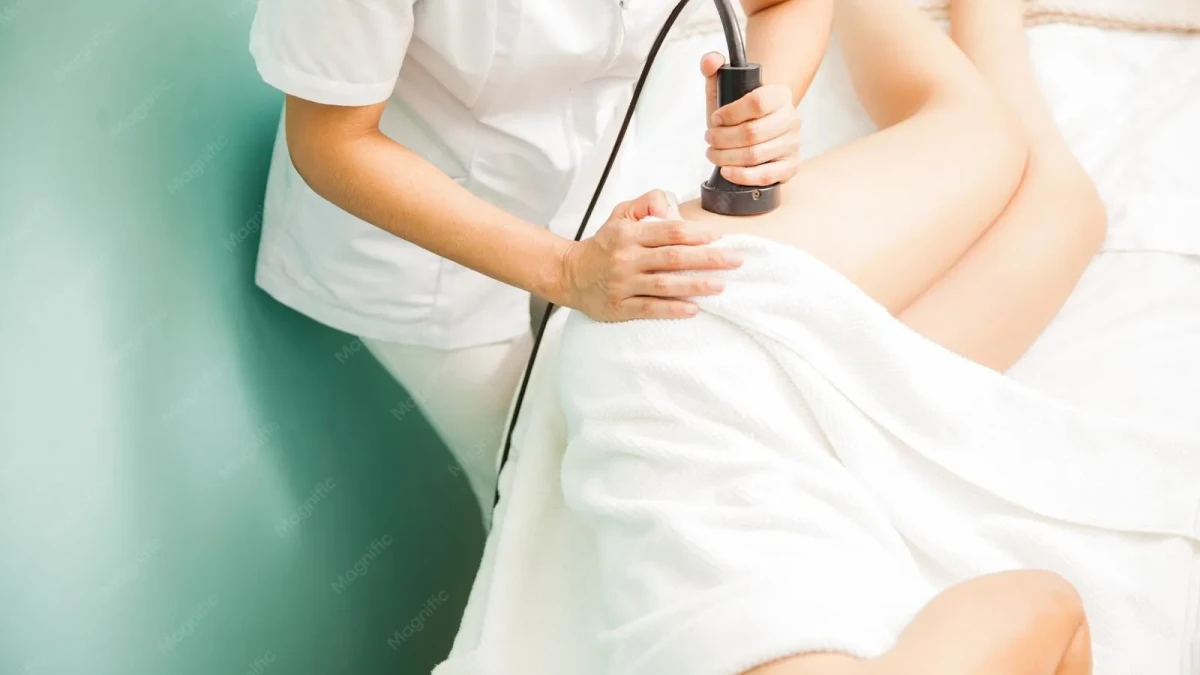
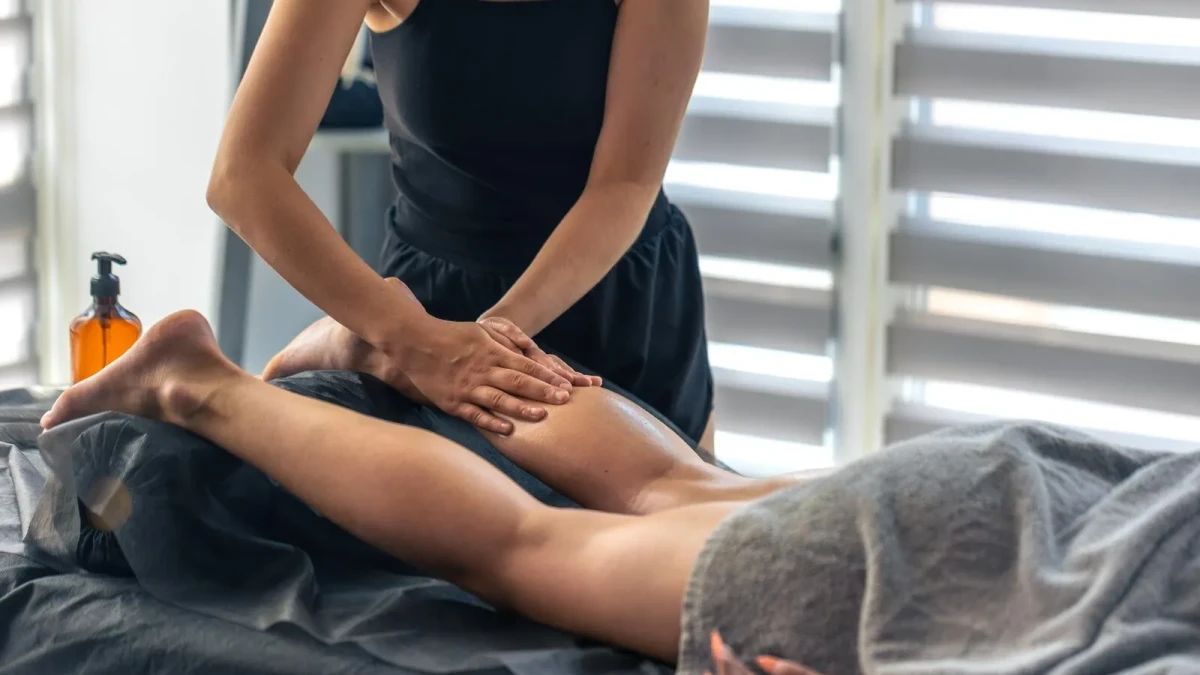
At our salon lymphatic drainage massage is done with a device and an air-pressure garment (suit), not by hand; pressure waves moving up from the feet support the lymphatic system's natural flow. It helps ease the feeling of heavy, puffy legs and is very relaxing. It's usually done once a week or at intervals set according to your needs. It's not a medical treatment but a complement to the habits above; expecting clear results from sessions alone, without moving more, isn't realistic.
For bloating around the stomach, see abdominal lymphatic drainage; to look at it alongside cellulite, see our guide to G5 massage and lymphatic drainage.
When Should You See a Doctor?
The following can signal a problem other than desk-related swelling and need a doctor rather than a massage:
- Sudden, painful, red or warm swelling in one leg (needs urgent assessment because of clot risk),
- Swelling with shortness of breath or chest pain (an emergency),
- Swelling that is still there when you wake up or keeps getting worse,
- Heart, kidney or liver conditions, or pregnancy.
For People Working in Şişli, Mecidiyeköy and Levent
Our salon is on Abide-i Hürriyet Avenue, within walking distance of the Şişli-Mecidiyeköy stop on the M2 metro line; from offices in Levent, Gayrettepe and Esentepe it's only a few stops. For directions and session planning, see our lymphatic drainage massage in Şişli page.
This content is for general information only and is not medical advice. If you have a chronic condition or the swelling doesn't go away, talk to your doctor. Results vary from person to person.
Frequently Asked Questions
Answers to the most frequently asked questions about this content
Why do my legs swell when I sit at a desk all day?
Sitting still for long periods reduces the pumping action of your calf muscles, so fluid collects in the legs due to gravity. Salt, heat and tight clothing can make it worse.
What can I do about leg swelling at the office?
Get up and walk every 30–60 minutes, do simple moves like ankle pumps and calf raises, drink enough water and cut down on salt.
Does lymphatic drainage help swollen legs?
It can help ease the feeling of heavy, puffy legs. But it isn't a medical treatment; it complements better movement and eating habits.
When should I see a doctor about leg swelling?
If one leg is suddenly swollen, painful, red or warm, if you're short of breath, if swelling is still there in the morning, or if you have a heart, kidney or liver condition.
Should I wear compression socks?
They can help with long-term symptoms; we recommend discussing the right pressure and how long to wear them with your doctor.