
Blogs
Is Laser Hair Removal Permanent? Touch-Ups and Realistic Expectations

Contents
- What Does "Permanent Hair Reduction" Mean?
- Why One Session Isn't Enough
- Why Can Hair Come Back?
- How Results Differ by Area
- When Do You Need a Touch-Up?
- Three Things That Shape Results: Device, Settings, Consistency
- Do At-Home Devices Give Permanent Results?
- Realistic Expectations
- Frequently asked questions
Short answer: laser hair removal gives permanent hair reduction. Once your course is complete, most of the treated follicles stop producing hair, and any hair that returns is usually finer, lighter and sparser. Hormonal changes, age and some medication can activate new follicles over time, so for most people one or two touch-up sessions a year keep results in place.
What Does "Permanent Hair Reduction" Mean?
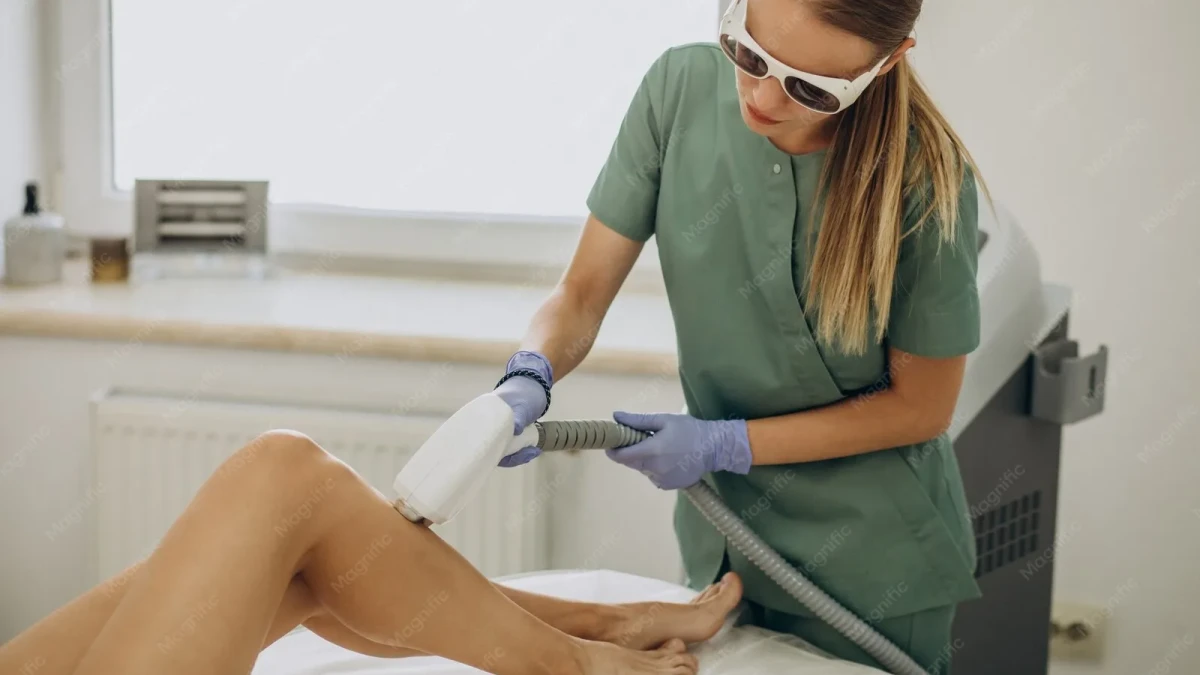
Two phrases get used a lot: "permanent hair removal" and "permanent hair reduction". The second is closer to the truth. Laser targets the pigment in the hair follicle and uses heat to disrupt its ability to grow hair. Follicles that are affected enough stop producing hair; those affected less may produce weaker, finer hair.
So the goal isn't "zero hair", but a long-lasting reduction that largely removes the need to shave or wax.
Why One Session Isn't Enough
Hairs don't all grow at once. Each goes through growth (anagen), transition (catagen) and rest (telogen). Laser works best on hairs in the growth phase, when the follicle is attached to the hair, and only some hairs are in that phase at any time. Sessions are therefore spaced to catch each new group as it enters growth.
For session numbers and intervals, read how many laser hair removal sessions do you need?
Why Can Hair Come Back?
- Hormonal changes: puberty, pregnancy, menopause or polycystic ovary syndrome (PCOS) can wake up follicles that weren't active before.
- Stopping early: if you stop before the plan is complete, follicles that hadn't entered growth were never targeted.
- Irregular intervals: sessions too close together or too far apart fall out of step with the hair cycle.
- Unpigmented hair: white, grey, blonde and very light red hair don't respond well to laser.
- Some medication: hormone-containing medicines or those that affect hair growth can trigger new growth.
How Results Differ by Area
| Area | General tendency |
|---|---|
| Underarms, legs, bikini | Coarse, dark hair; usually the best responders |
| Arms, back, chest | Good response; in men, slightly higher chance of touch-ups due to hormones |
| Face (upper lip, chin, beard line) | Most hormone-sensitive; touch-ups are most common here |
Hair concentrated on the chin and neck can point to a hormonal cause. We cover this in laser hair removal for hirsutism and PCOS.
When Do You Need a Touch-Up?
- First 6–12 months after the course: watch the area. If there's no clear increase, you may not need anything extra.
- A few dark hairs appear: one touch-up session is usually enough to target them.
- Long term: one or two sessions a year keeps results for most people; this can increase during hormonal changes.
Three Things That Shape Results: Device, Settings, Consistency
Device: wavelength determines how much energy reaches the follicle, and different skin and hair types suit different wavelengths. We use the Megatron 4D Diode, combining 755, 808, 940 and 1064 nm.
Settings: too little energy only weakens the follicle; too much stresses the skin. The right setting comes from assessing your hair and skin, which is why every plan starts with a free hair analysis and patch test.
Consistency: keeping to intervals, avoiding waxing and tweezing between sessions and protecting your skin from the sun all affect the outcome. See laser hair removal before and after.
Do At-Home Devices Give Permanent Results?
At-home IPL and laser devices work at lower energy for safety. They can thin and reduce hair, but usually need ongoing use to maintain the effect. We compare them in at-home laser vs professional diode laser.
Realistic Expectations
- Once the course is complete, most hair doesn't return.
- Remaining hair is finer and sparser; shaving becomes rare.
- The face and hormonal conditions need more follow-up.
- White and grey hair can't be treated with laser.
- One or two touch-ups a year keeps results for most people.
See all areas on our hair removal page, or how it works at our salon on laser hair removal in Şişli.
This content is for general information and is not medical advice. If you suspect hormonal hair growth, see your doctor. Results vary from person to person. Our centre offers beauty and care services, not medical procedures.
Frequently Asked Questions
Answers to the most frequently asked questions about this content
Is laser hair removal permanent?
Laser gives permanent hair reduction. Once the course is complete most hair doesn't return, and what remains is finer and sparser.
Why does hair come back after laser?
Hormonal changes, stopping the course early, irregular intervals and some medication can activate new follicles.
When do I need a touch-up?
If a few dark hairs appear after the course, one touch-up is usually enough. For most people one or two sessions a year maintain results.
Which area is least permanent?
The face (upper lip, chin, beard line) is the most hormone-sensitive area, so touch-ups are most common there.
Can laser permanently remove blonde or white hair?
No. White, grey, blonde and very light hair carry no pigment and don't respond well to laser.
Do at-home devices give permanent results?
At-home devices use lower energy; they can thin hair, but usually need ongoing use to maintain the effect.