
Blogs
Genital Laser Hair Removal: Sessions, Pain and Preparation Guide

Contents
- Which areas does genital laser hair removal cover?
- How does it work?
- Does genital laser hair removal hurt?
- How many sessions do you need?
- How to prepare for your session
- Aftercare
- Privacy: what happens during the session?
- Who is it not suitable for?
- Differences between treatment for women and men
- The bottom line
- Frequently asked questions
Genital laser hair removal is one of the treatments people are most curious about and least likely to ask about. Questions like "Will it hurt?", "How much do I have to undress?" and "How many sessions until it's done?" often go unasked until the first appointment. In this guide we answer the questions we hear most at our Şişli salon, frankly and without exaggeration.
Which areas does genital laser hair removal cover?
For women, treatment is usually planned in one of two ways:
- Bikini line: The area outside your swimwear or underwear line.
- Full genital (Brazilian): The bikini line plus the external genital area and between the buttocks. Mucous membranes (internal areas) are never treated.
You decide which area is treated, and the boundaries are agreed clearly before the session begins. Details of the treatment for women are on our genital laser hair removal (female) page, and for men on our genital laser hair removal (male) page.
How does it work?
The laser light is absorbed by the pigment (melanin) in the hair and turned into heat. That heat weakens the follicle's ability to grow new hair. Because hairs are at different stages of growth, a single session cannot reach every follicle, so treatment is repeated at set intervals.
Hair in the genital area is usually thick and dark, so it responds well to laser. The skin there can be darker in tone, however, so the energy settings need to be chosen carefully.
Does genital laser hair removal hurt?
This is the question we hear most, and the honest answer is: it would be wrong to say you'll feel nothing, but for most people it is far less painful than they feared. What you feel is usually a brief warmth and a snap, similar to a rubber band. The first sessions, when the hair is densest, are the most noticeable; the sensation eases as the hair thins out.
A few things make it more comfortable:
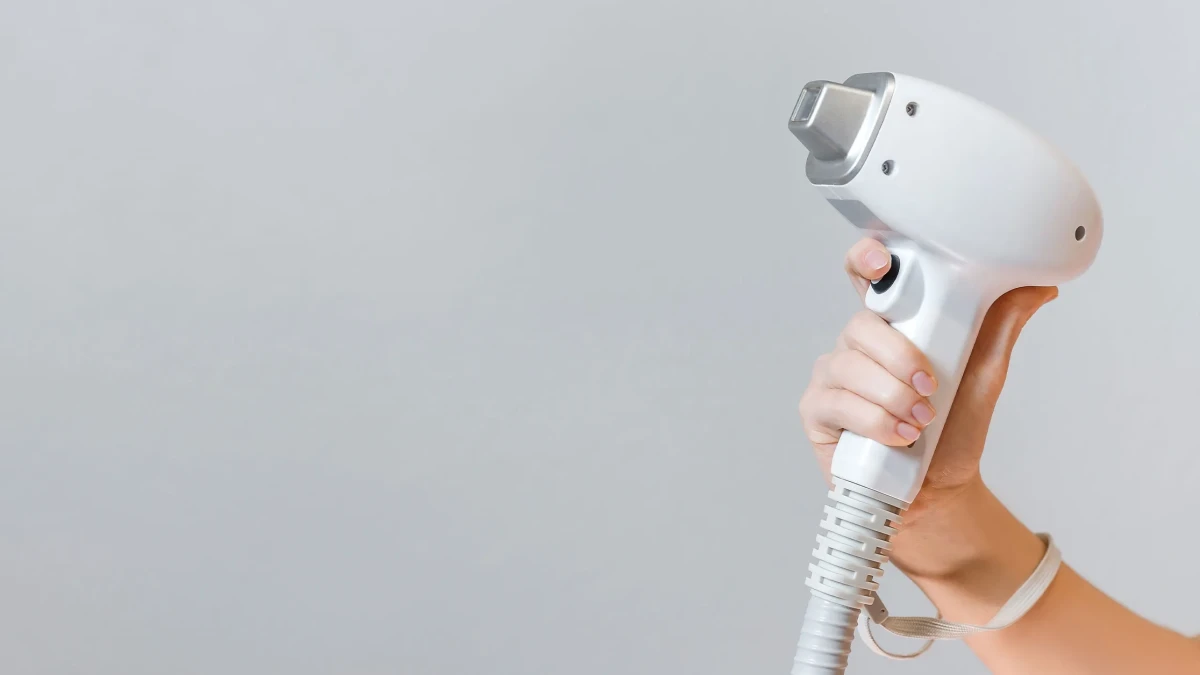
- A cooling head: The diode laser we use at our salon cools the skin with every pulse. You can read more about the technology in our Smart Diode ice laser article.
- Shaving properly: Shaving the day before stops surface hair from heating up and causing unnecessary discomfort.
- Timing: Skin is more sensitive just before and during your period, so schedule your session outside those days if you can.
- Speaking up: Tell us the moment you feel uncomfortable and we'll pause or adjust the settings.
How many sessions do you need?
For the genital area, 6–8 sessions are usually recommended. Sessions start 4–6 weeks apart, and the gap grows as the hair reduces. Hormones, hair density and skin tone can change this number. After the programme, one or two top-up sessions a year may be needed.
Laser hair removal reduces hair significantly, but promising that no hair will ever grow back would not be honest. The hairs that remain are usually much finer and sparser. To get a clear session plan for you, book a free hair analysis.
How to prepare for your session
- 4 weeks before: Stop waxing, plucking and epilating. The laser targets the follicle; if you pull the hair out by the root, there is nothing left for it to work on.
- 2 weeks before: Keep the area out of the sun and tanning beds, and avoid self-tanning products.
- 1 day before: Shave the area to be treated with a razor. You can leave any hard-to-reach spots to us.
- On the day: Arrive with clean, dry skin and no cream, deodorant or perfume on the area. Wear comfortable, loose clothing.
Aftercare
- Mild redness and warmth fade within a few hours.
- Avoid hot showers, pools, saunas and intense exercise for 24 hours.
- For a few days, choose loose cotton underwear over tight synthetic fabrics.
- Hairs start to shed on their own within 1–3 weeks; don't pull them out, but you can keep shaving.
Privacy: what happens during the session?
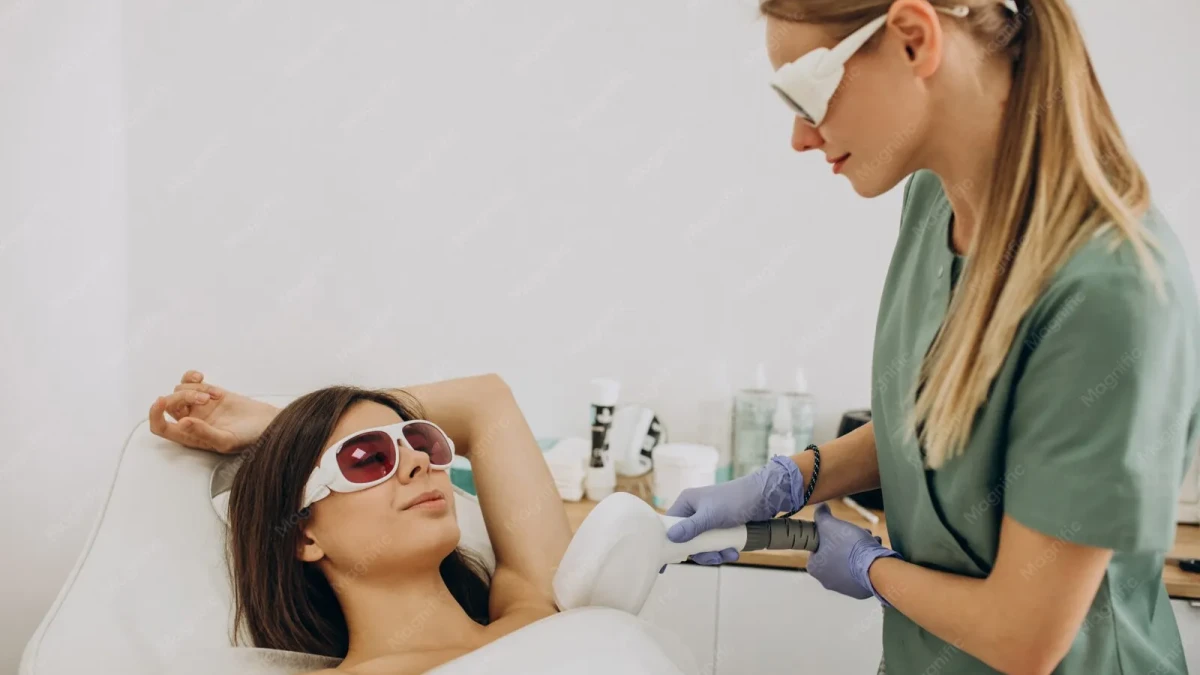
Treatment takes place in a closed, private room. You are given disposable underwear and only the area being treated is uncovered. The steps are explained before we start, and you can stop the session at any time.
Who is it not suitable for?
- Pregnancy
- Active infection, open wounds, cold sores or warts in the area
- Recently tanned skin
- Medication that causes light or heat sensitivity (mention any medication at your consultation)
White, grey or very light hair contains no pigment and does not respond to laser; if that applies to you, we will tell you openly.
Differences between treatment for women and men
Men's hair is usually thicker and denser, so the number of sessions and energy settings can differ. We explain the differences in detail in male vs female genital laser hair removal.
The bottom line
With the right preparation, a cooled device and open communication, genital laser hair removal is not the ordeal many people expect. For anyone tired of ingrown hairs and irritation, it saves a lot of time in the long run. Feel free to ask us anything before you book; you can reach us through our laser hair removal in Şişli page.
This content is for general information only and is not medical advice. The services offered at Renew & Revive are beauty and wellness treatments. Please consult a doctor about any health concerns. Results vary from person to person.
Frequently Asked Questions
Answers to the most frequently asked questions about this content
Does genital laser hair removal hurt?
You will feel something, but for most people it is far less painful than expected: a brief warmth and a snap like a rubber band. A cooling head and proper shaving make it more comfortable, and the sensation eases as the hair thins.
How many sessions does genital laser hair removal take?
Usually 6–8 sessions, starting 4–6 weeks apart. The number can vary with hormones, hair density and skin tone.
Should I shave before my session?
Yes, shave with a razor the day before. Stop waxing, plucking and epilating at least 4 weeks before your session.
Can I have treatment during my period?
Skin is more sensitive around your period, so we recommend scheduling genital sessions outside those days.
Are internal areas treated?
No. Treatment is limited to the bikini line and external genital area; mucous membranes are never treated. The exact area is agreed with you before the session.
When can I go swimming after laser?
Avoid pools, saunas, hot showers and intense exercise for 24 hours. Loose cotton underwear for a few days helps prevent irritation.