Blogs
Cracked Hands and Dry Nails in Winter: A Hand Care Guide
Contents
Short answer: the basics of winter hand care are drying your hands after every wash and moisturising straight away, wearing gloves outdoors and rubber gloves for housework, and using a richer cream and cuticle oil at night. The skin on the backs of your hands and between your fingers has fewer oil glands than your face, so it dries out and cracks much faster in the cold.
Why Do Hands Crack in Winter?
- Cold and wind: low outdoor humidity increases water loss from the skin's outer layer.
- Central heating: indoor air is dry too, so hands lose moisture all day.
- Frequent washing and sanitiser: soap and alcohol-based products strip the skin's protective oils.
- Hot water: putting cold hands under hot water speeds up dryness.
- Detergents: washing-up liquid and cleaning products dry out both hands and cuticles.
Dry Nails and Hangnails
Nails depend on moisture just like skin. In winter a dry nail loses flexibility, the tips split into layers and the edges break easily. Dry cuticles form hangnails, and pulling them off creates small wounds that can become inflamed. Instead of pulling, trim them at the base with clean nail scissors and apply a drop of cuticle oil.
A Daily Winter Hand Care Routine
- Wash with lukewarm water and a mild soap. Choose a moisturising hand wash over harsh, fragranced soaps.
- Pat dry, especially between your fingers.
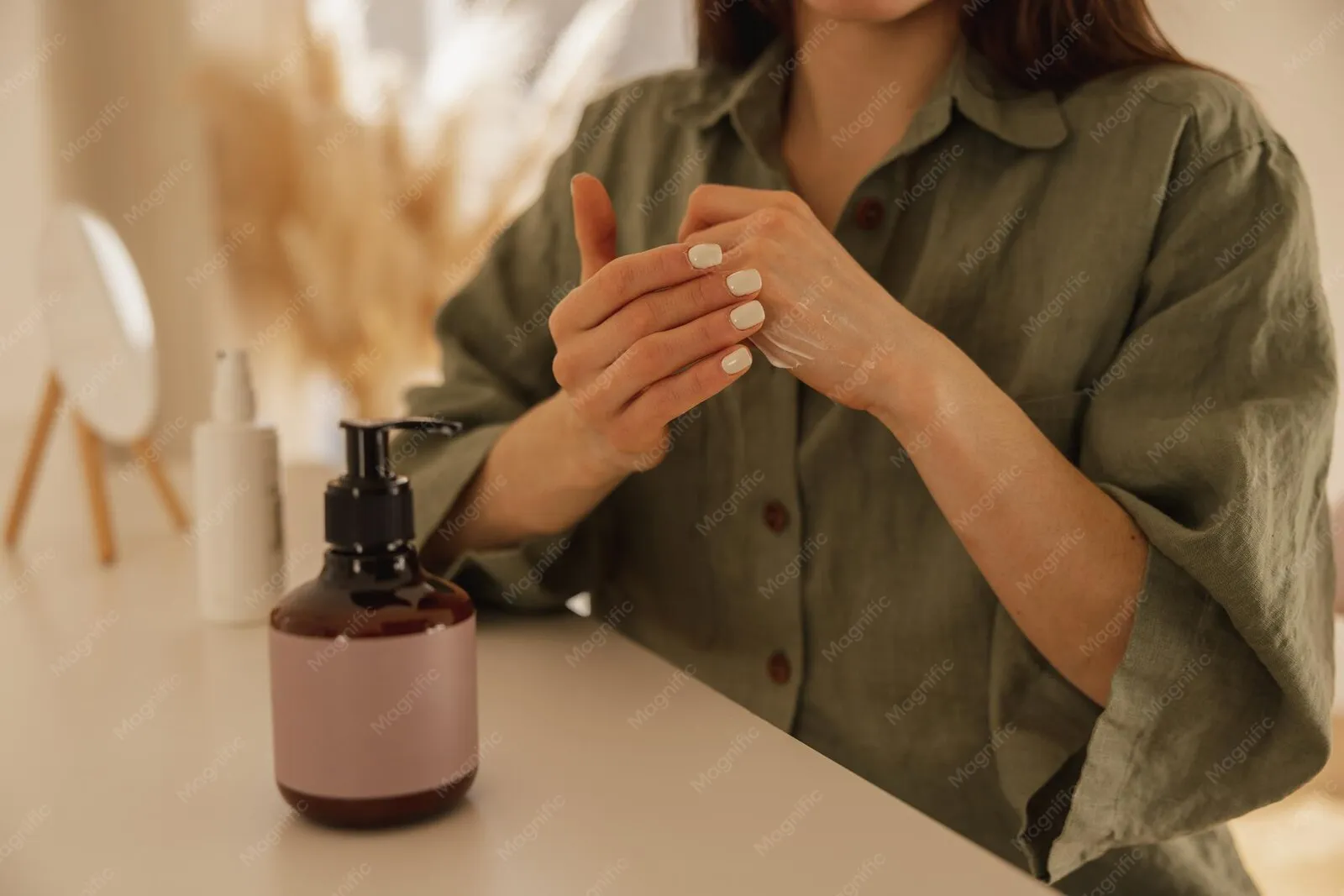
- Moisturise straight away: work cream into the backs of your hands, your knuckles and around the nails. Repeat after every wash.
- Gloves outdoors: the simplest protection from cold and wind.
- Rubber gloves at home: for washing up and cleaning; cotton gloves underneath reduce sweating.
- Night care: a richer cream or balm, plus cuticle oil. For very dry hands, sleeping in cotton gloves over the cream boosts the effect.
How to Choose a Hand Cream
| Need | Look for |
|---|---|
| Daytime, frequent use | Light, fast-absorbing; glycerin, hyaluronic acid |
| Very dry, cracked hands | Shea butter, ceramides, urea, panthenol |
| Overnight repair | Richer balms; petrolatum-based or oil-rich formulas |
| Sensitive skin | Fragrance-free, short ingredient lists |
Nail Care in Winter
- Short, rounded shape: nails are more brittle in winter; a short shape with soft edges catches and breaks less.
- Use acetone less often: frequent polish changes dry nails out. If you want long-lasting colour, gel polish reduces how often you change it; for safe removal and aftercare, see our gel polish aftercare guide.
- File in one direction: sawing back and forth splits the tips.
- Don't tear a broken nail: it can often be repaired without cutting; read gel polish for broken nails.
How a Professional Manicure Helps in Winter
In a professional manicure the cuticles are softened and gently pushed back, only the necessary dead skin is removed, the nails are shaped and the hands are moisturised to finish. In winter, when hangnails and cracks are common, a manicure every 2–3 weeks makes it much easier to keep hands looking cared for. See how a session works on our manicure page, and add a pedicure on the same day if you like.
When to See a Doctor
Deep, bleeding cracks, itchy blistering dryness with redness, or sores that don't heal within a few weeks of moisturising can be signs of hand eczema or contact dermatitis. Nail discolouration, thickening or a nail lifting from its bed also needs a dermatologist's assessment.
Don't Forget Your Face
The conditions that dry your hands affect your face too. See our winter skincare guide.
Manicures and Hand Care in Şişli, Istanbul
At our salon on Abide-i Hürriyet Avenue in Şişli, we plan manicures, gel polish and nail care around the condition of your nails. See every option on our nail care page, or book by WhatsApp or phone on +90 533 038 48 24.
This article is for general information and is not medical advice. If you suspect a skin or nail condition, consult a dermatologist. Results vary from person to person.
Frequently Asked Questions
Answers to the most frequently asked questions about this content
Why do hands crack in winter?
Cold and wind, central heating, frequent washing, sanitiser and detergents strip the skin's protective oils. The backs of the hands have few oil glands, so they dry and crack quickly.
How often should I apply hand cream?
In winter, after every hand wash, as soon as your hands are dry. A richer cream and cuticle oil at night help repair.
How do I deal with hangnails?
Don't pull them. Trim them at the base with clean nail scissors and apply cuticle oil. Regular moisturising and manicures reduce new hangnails.
How often should I get a manicure in winter?
Every 2–3 weeks suits most people, depending on how fast your nails grow; cuticle oil and hand cream keep the result in between.
When should cracked hands be checked by a doctor?
See a dermatologist for deep, bleeding cracks, itchy blistering redness or sores that don't heal within a few weeks of moisturising.