Blogs
Why Do Nails Break? 8 Ways to Strengthen Your Nails
Contents
Short answer: breaking and peeling nails are mostly caused by external factors: frequent water and detergent contact, dryness, using nails as tools, harsh filing and scraping or pulling off gel polish or extensions. Fix these habits and moisturise nails and cuticles regularly, and most people see stronger nails within a few months. A fingernail takes around 4–6 months to fully grow out, so patience helps.
Why Do Nails Break?
Nails are made of stacked layers of keratin. When the moisture and oil balance holding these layers together is disrupted, nails either dry out and become brittle or get too soft, bend and tear.
- Frequent water and detergent: nails absorb water and swell, then shrink as they dry; this cycle separates the layers.
- Acetone and harsh chemicals: strip natural oils.
- Using nails as tools: opening cans or scraping labels weakens the tips.
- Harsh filing: sawing back and forth splits the ends.
- Bad removal: peeling or scraping off gel polish or extensions takes the top nail layer with it.
- Season and dry air: heated rooms in winter dry nails out.
- Diet and health: iron deficiency, thyroid issues and some skin conditions can also affect nails.
8 Ways to Strengthen Your Nails
1. Wear gloves for chores
Gloves for washing up and cleaning are the fastest way to cut water and detergent damage.
2. Use cuticle oil and hand cream
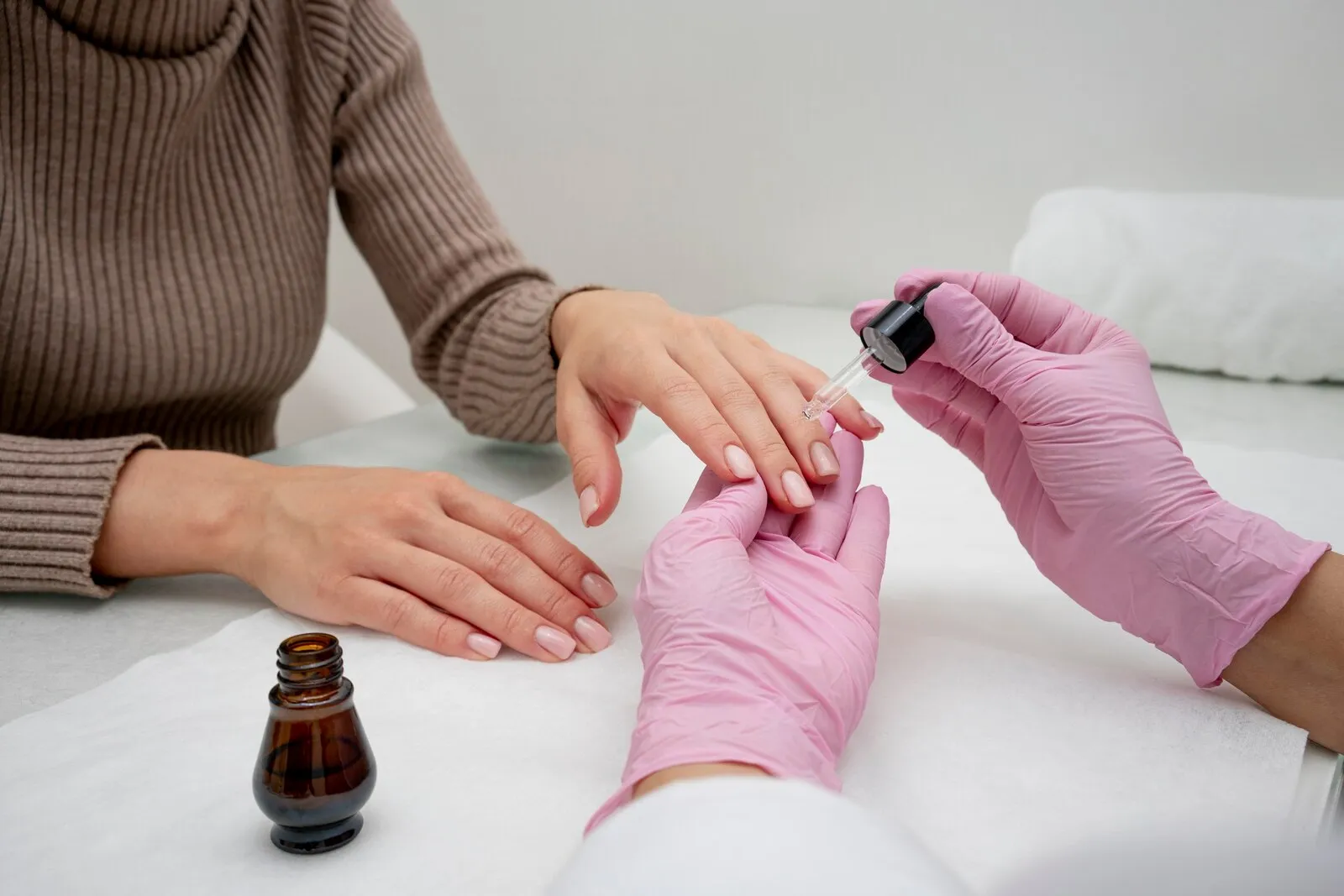
Apply hand cream every time you wash your hands and cuticle oil at least once a day. Healthy cuticles mean new nail grows out more evenly.
3. File in one direction
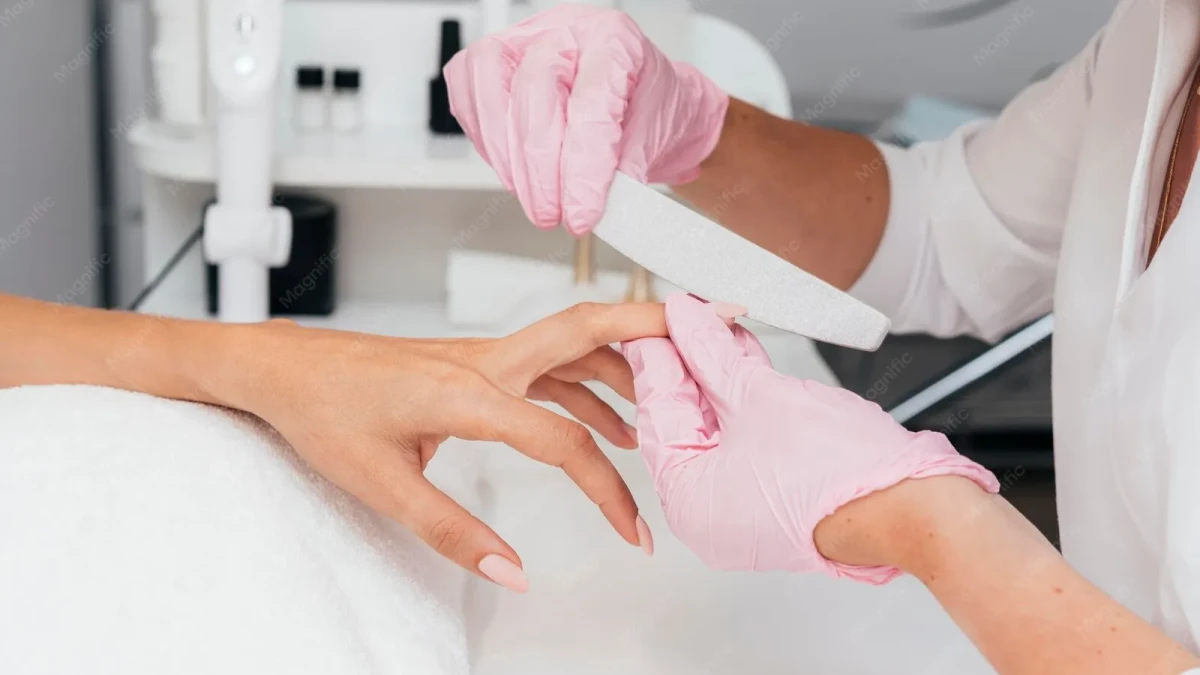
Use a fine file and work from the side towards the centre in one direction. Avoid metal and very coarse files.
4. Keep nails short and rounded
While nails are weak, a short, soft oval shape lowers the risk of breaks. Grow them longer as they strengthen.
5. Choose gentle, acetone-free products
Remove regular polish with an acetone-free remover and don't rub the same nail over and over.
6. Never peel or scrape off gel polish
Properly removed gel polish doesn't damage nails; the damage usually happens during removal. We cover common mistakes in how to remove gel polish and aftercare in our gel nail care guide.
7. Give nails a break between applications
If you wear gel polish or extensions continuously and your nails have thinned, a few weeks focused only on care and moisture helps them recover.
8. Eat a balanced diet and see a doctor if needed
A diet with enough protein, iron and zinc supports nail structure. Rather than taking supplements at random, if the problem is marked, ask your doctor about checking your blood values.
What a Salon Manicure Adds
A professional manicure corrects the shape, gently pushes back and cares for the cuticles and seals peeling tips with the right file. Regular manicures make peeling and rough edges less noticeable. For fixing a broken nail without cutting it, see gel polish for broken nails.
Torn between gel polish and extensions? Read acrylic nails or gel polish. All options are on our nail care page.
When to See a Doctor
If a nail is discoloured, thickened, lifting from the nail bed, pitted, painful or red, see a dermatologist first. These can be signs of fungus, psoriasis or another health issue, and we don't treat such nails at our salon.
This content is for general information and is not medical advice. Results vary from person to person.
Frequently Asked Questions
Answers to the most frequently asked questions about this content
Why do my nails break?
Common causes are frequent water and detergent contact, dryness, using nails as tools, harsh filing and scraping off gel polish.
How long until weak nails get stronger?
A fingernail takes about 4–6 months to fully grow out; once habits change, you'll see a difference within a few months.
Does gel polish weaken nails?
Not when applied and removed properly; damage usually comes from peeling or scraping it off.
Does cuticle oil help?
Yes. Using cuticle oil at least once a day supports moisture balance and helps new nail grow out more evenly.
How should I file my nails?
Use a fine file and work from the side to the centre in one direction; avoid sawing back and forth.
When should I see a dermatologist?
If a nail is discoloured, thickened, lifting, pitted, painful or red, see a dermatologist first.