Blogs
Upper Beard Laser Hair Removal: A Guide to a Sharp Beard Line
Contents
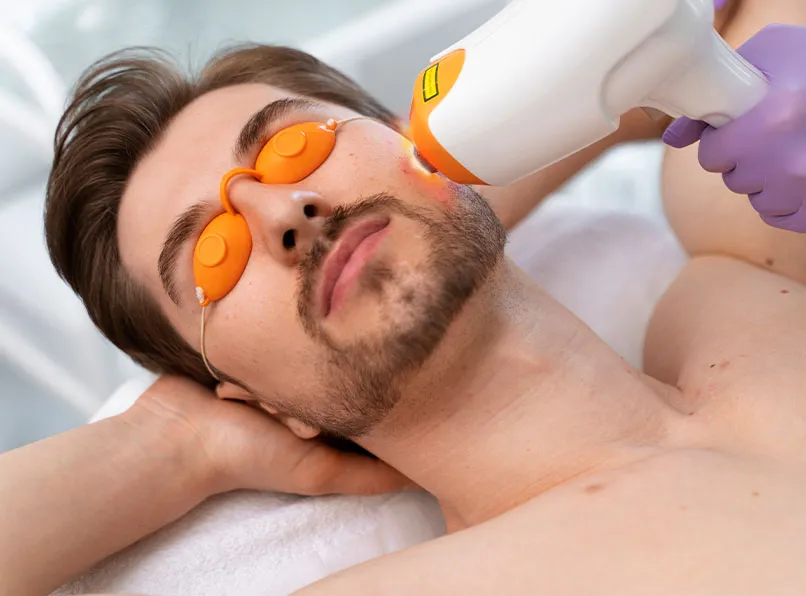
The most common complaint from men who keep a beard is stray hair creeping up the cheeks. Tidying that line with a razor every morning takes time and irritates the skin. Upper beard laser hair removal reduces the hair between the cheekbone and the top edge of the beard, so your beard line stays sharp for the long term. This guide covers how the line is set, what the sessions involve and how to plan the upper beard alongside other facial areas.
What Is Upper Beard Hair Removal?
The upper beard area is the upper part of the cheeks, above the natural edge of the beard. Laser reduces hair density in this zone without touching the beard itself. The result is a neater beard, more defined facial contours and far less daily tidying.
Why Men Choose It
- Time: no more shaping the beard line every day or two.
- Skin comfort: less razor burn, redness and irritation from frequent shaving.
- Ingrown hairs: thick, curly beard hair easily grows back into the skin after shaving; as density drops, this usually happens less. See our article on ingrown hair in men.
- Symmetry: a fixed, even line keeps the beard looking groomed at all times.
How the Beard Line Is Set
Setting the line correctly before treatment is the most important step, because hair in the treated area is reduced for the long term.
- Find the natural edge: where the beard stops being dense is the base of the line.
- Start conservatively: a line drawn too low can look unnatural. It is safer to stay higher in the first sessions and lower the line later if needed.
- Check symmetry: the line is marked at the same height and with the same curve on both cheeks.
- Think ahead: if you plan to grow your beard longer or shave it off in future, mention it at the consultation.
We set the line together with you in the mirror and don't start until you are happy with it.
How We Treat It
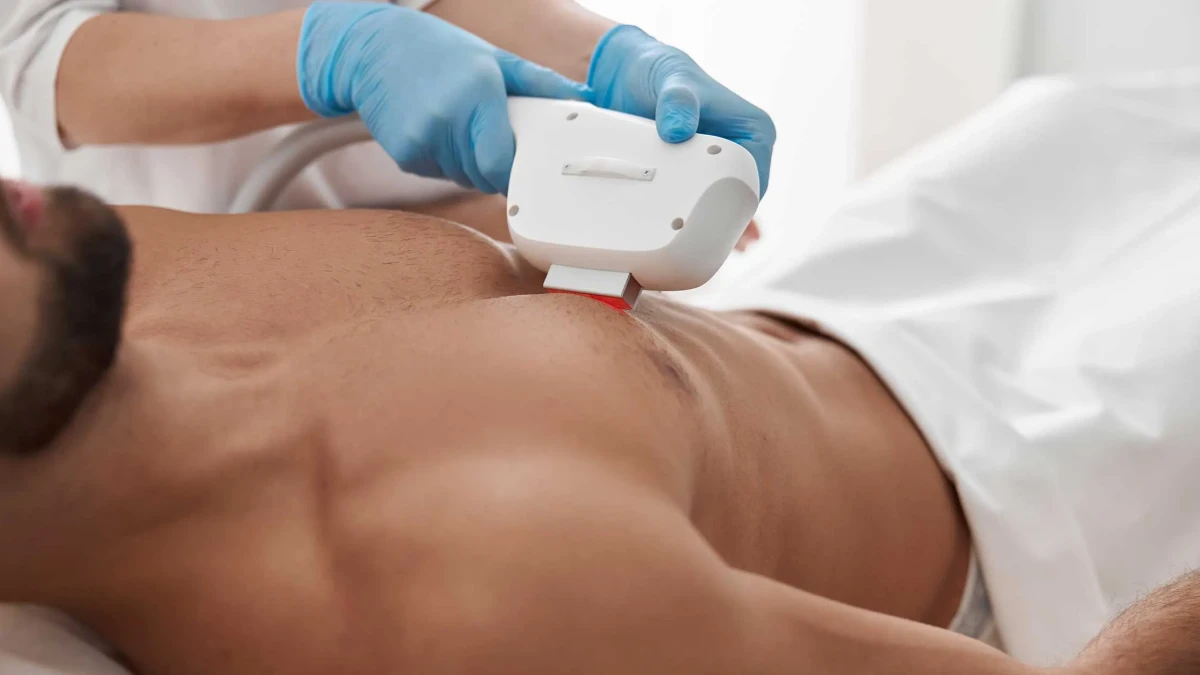
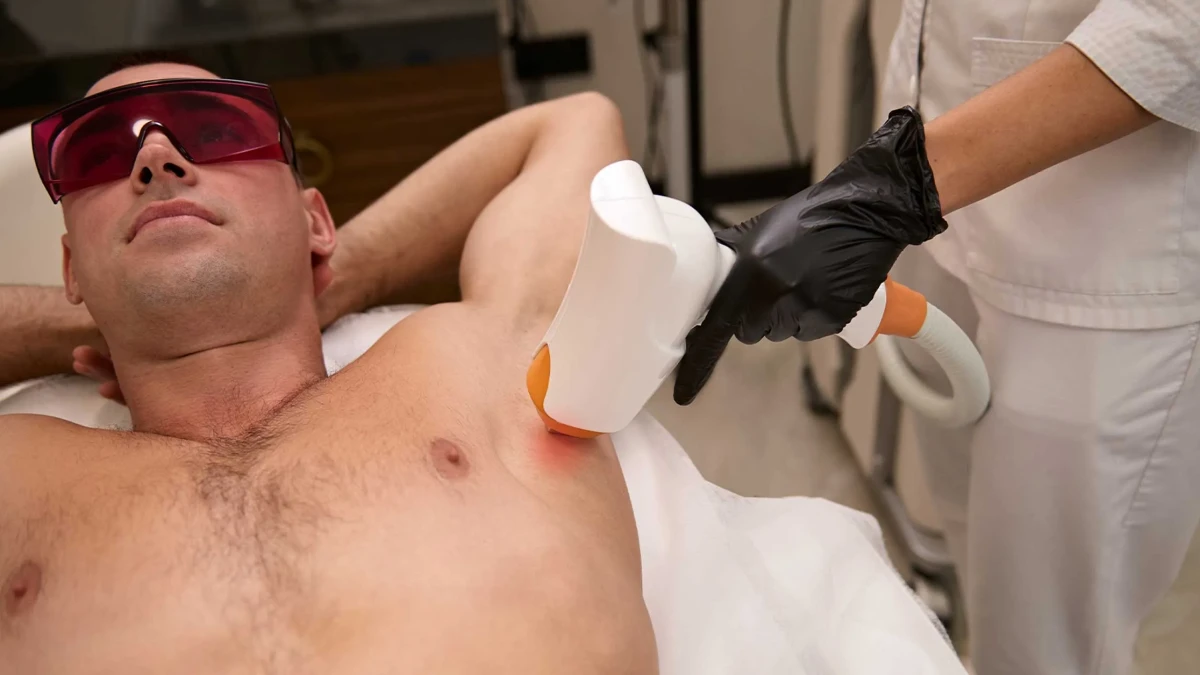
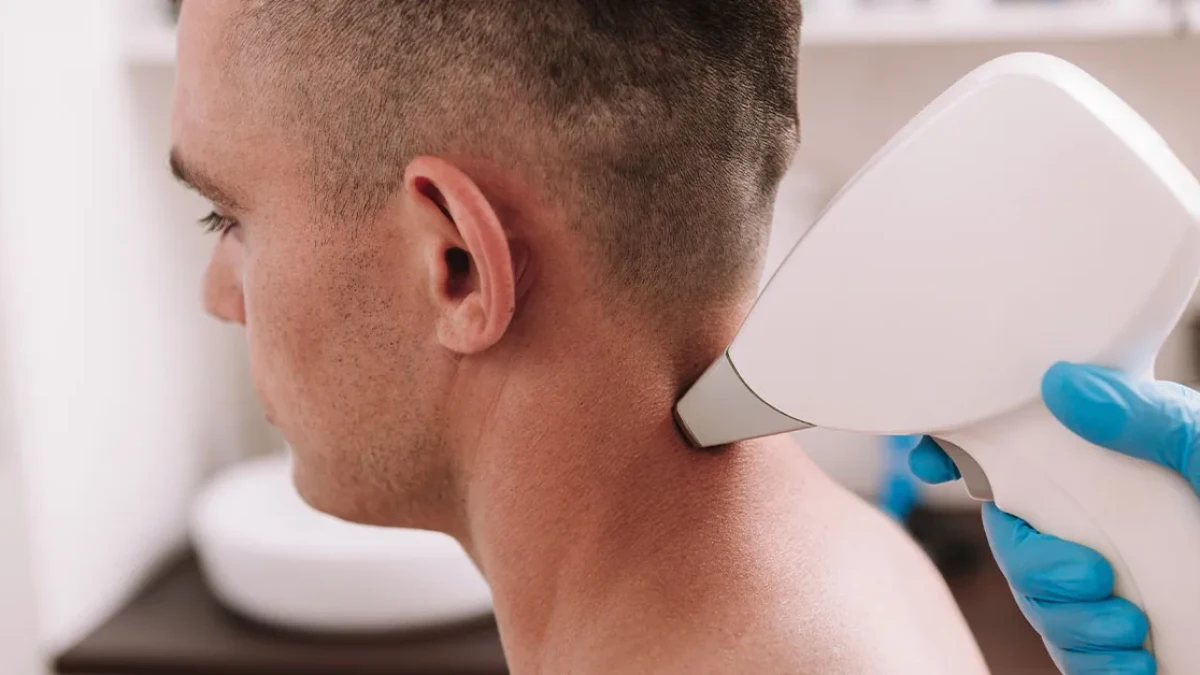
For the face we use a diode ice laser combining four wavelengths (755, 808, 940 and 1064 nm). Sapphire contact cooling keeps sensitive facial skin comfortable, and the 1064 nm wavelength allows safer settings for darker skin tones. As the upper beard is a small area, the session is short. Service details: upper beard laser hair removal for men.
How Many Sessions?
Facial hair is more responsive to hormones, so 8–10 sessions is a common range for the upper beard in men. Facial sessions are usually 4–6 weeks apart. Hair becomes sparser and finer after the first sessions; once the course is complete, one or two top-ups a year may be needed. We set your exact plan after a free hair analysis and patch test.
Planning It with Other Facial Areas
The upper beard is rarely treated on its own. Here is which page covers which area:
| Area | Why men choose it | Service page |
|---|---|---|
| Upper beard | A sharp cheek line | Upper beard |
| Under beard / neck | A clean neckline, fewer ingrowns | Under beard |
| Full beard | Reducing the beard altogether or evening out density | Beard laser hair removal |
| Sideburns | Shaping the sideburn edge | Sideburns |
| Between the brows | Removing a monobrow look | Between the brows |
A quick note on between the brows
Between the brows is, after the upper beard, the facial area men ask about most. It is a very small area, so treatment takes only a few minutes; the natural shape of the brows is kept and only the hair in between is targeted. Because it is close to the eyes, eye protection is used during treatment.
Before and After
- Shave the area with a razor 12–24 hours before; don't pluck or wax.
- The face gets the most sun, so use a high-SPF sunscreen before and after sessions.
- Avoid saunas, hammams and steam for the first 24–48 hours.
- Mild redness afterwards is normal and usually settles quickly. Skip alcohol-based aftershave on the day.
Limits and Realistic Expectations
Laser targets pigment in the hair root, so it does not work on white, grey or very light hair. In men, testosterone can bring back some fine hair over time, so the goal is not "zero hair for life" but "a sharp, easy-to-maintain beard line for a long time". For the overall process, see our men's laser hair removal guide; for the back and nape, see our men's back laser guide.
Book a Visit
We are at Abide-i Hürriyet Caddesi No:141, Şişli, open Monday to Saturday, 10:00–19:00. To set your beard line together, book on WhatsApp or by phone at +90 533 038 48 24.
This content is for general information only and is not medical advice. Our salon offers beauty and care services, not medical procedures. Results vary with hair type, skin type and hormones.
Frequently Asked Questions
Answers to the most frequently asked questions about this content
How many sessions does upper beard laser hair removal take?
Facial hair is more responsive to hormones, so 8–10 sessions is a common range for men. Sessions are usually 4–6 weeks apart.
How is the beard line set?
We mark the line with you in the mirror before treatment, following the natural edge of the beard and keeping both cheeks symmetrical. We recommend starting conservatively.
Will it affect my beard?
No. Laser is applied only above the agreed line; the beard itself is not treated.
Does upper beard laser hurt?
Thanks to sapphire contact cooling, most people describe a brief prick. The area is small, so sessions are short.
Can I have between the brows done in the same session?
Yes. Between the brows, upper beard, under beard and sideburns can all be combined in one session plan.
Does laser remove white hairs?
No. Laser targets pigment in the hair root, so it does not work on white, grey or very light hair.