Blogs
Ingrown Hair in Men: How Laser Hair Removal Helps
Contents
Short answer: ingrown hairs happen when a shaved hair curls back or grows sideways into the skin, causing red bumps, itching and sometimes dark marks. They are most common on the neck, beard line, chest and back in men with coarse or curly hair. Gentle shaving habits help in the short term; laser hair removal helps in the long term because it makes hair finer and sparser, so there is less hair to grow back into the skin.
Why Men Get Ingrown Hairs
- Coarse, curly hair: it bends back towards the skin more easily after shaving.
- Close shaving: multi-blade razors and shaving against the grain leave a sharp tip below the skin surface.
- Dead skin build-up: it can trap the hair under the surface.
- Friction: tight collars, backpacks and sports kit irritate the neck and back.
What You Can Do at Home
- Shave with the grain, using a sharp blade and fewer passes.
- Soften the hair first with warm water and use a shaving gel.
- Exfoliate gently a few times a week to keep the surface clear.
- Don't dig hairs out with tweezers or squeeze bumps; that leads to infection and marks.
- Leave a little stubble instead of a skin-close shave if your skin reacts badly.
How Laser Hair Removal Helps
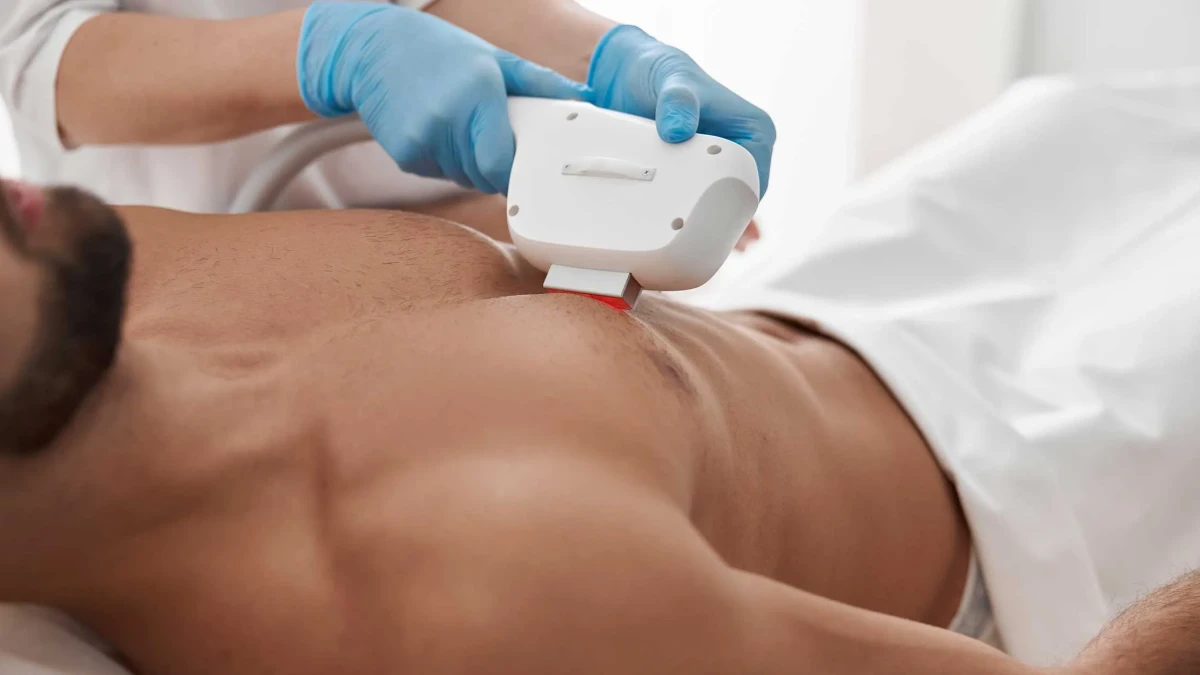
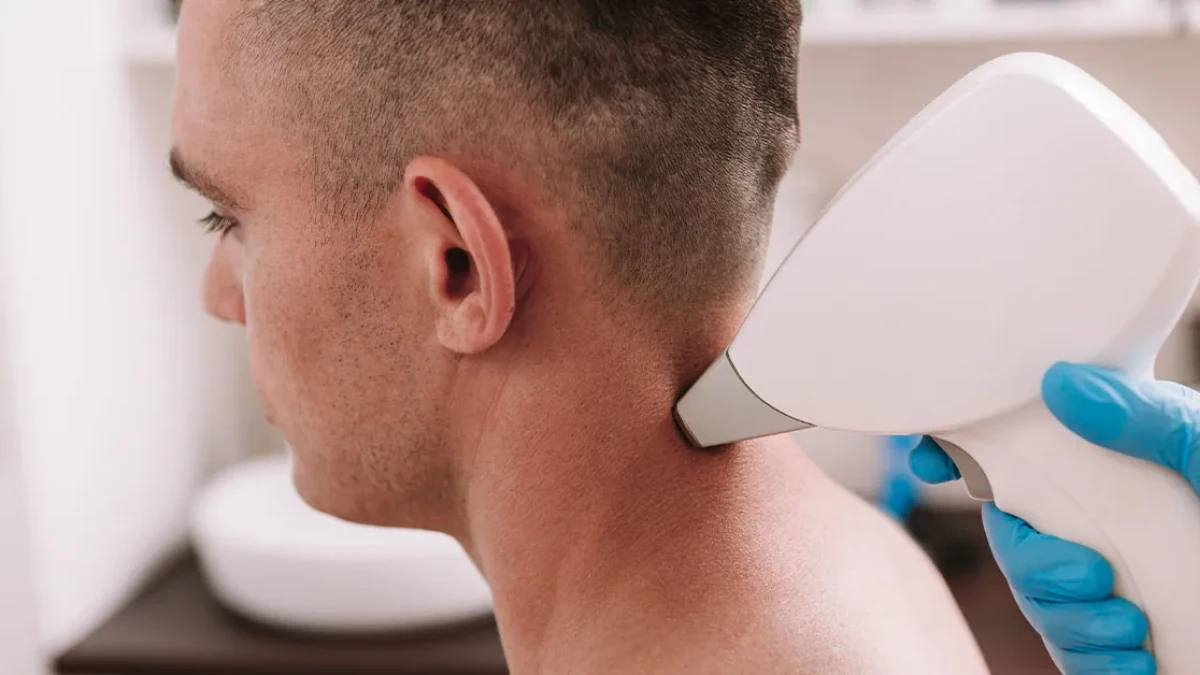
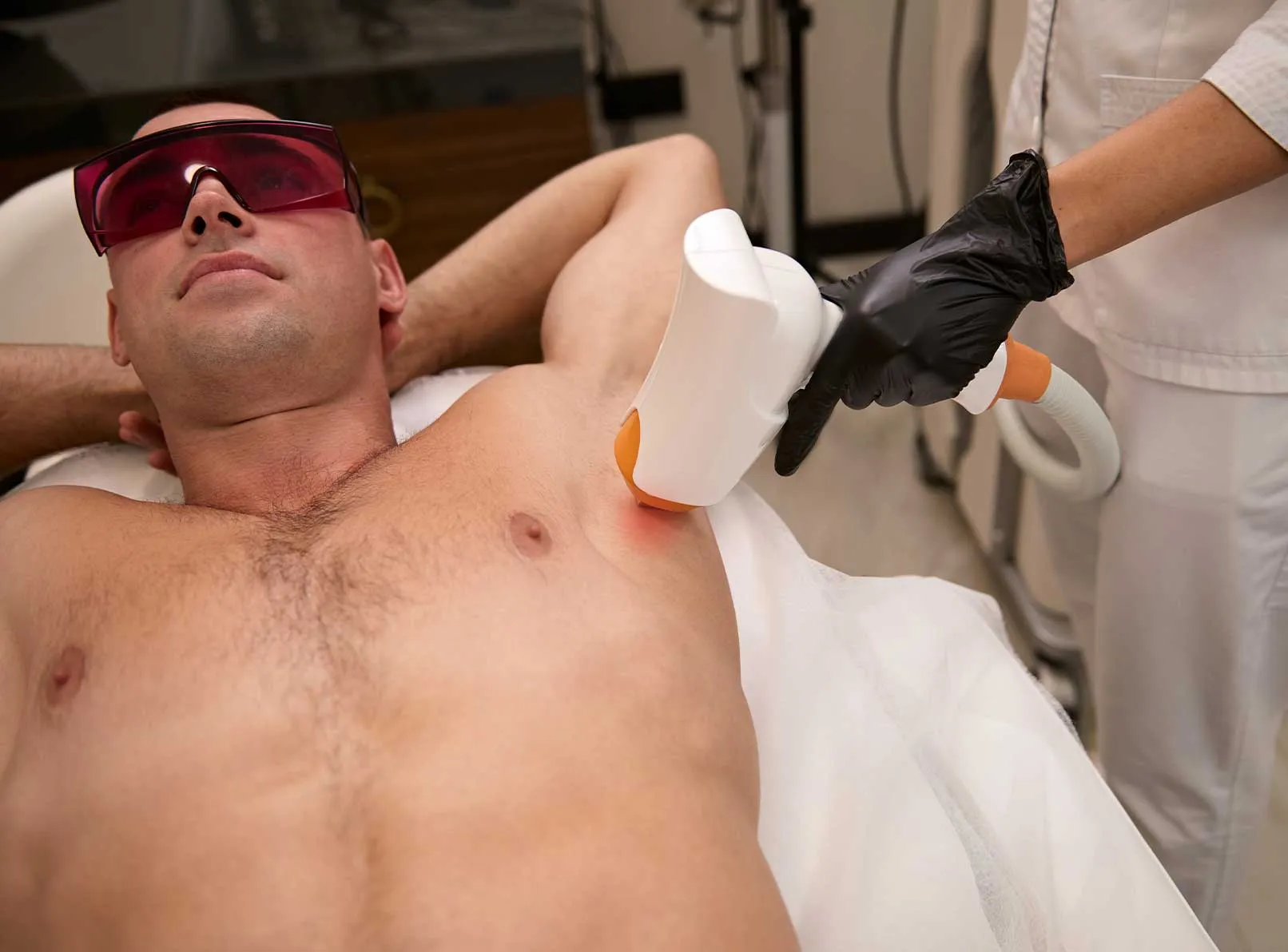
Laser targets the pigment in growing hair and weakens the follicle. Over a course of sessions, hair becomes finer and fewer hairs grow back, which means fewer chances for a hair to curl into the skin. Many men choose it for the neck and lower beard line, where razor bumps are worst. Coarse male hair responds well, and longer wavelengths such as 940 and 1064 nm help settings stay safe on darker skin. Most areas need around 6–8 sessions; hormones and hair density can change that number.
Areas men often treat for ingrown hairs:
- Under the beard and neck,
- Upper beard line,
- Nape and back.
See all areas on our men's laser hair removal page.
When to See a Doctor
If bumps are painful, filled with pus, keep coming back in the same spot or leave raised scars, see a dermatologist. Infected or inflamed skin should heal before any laser session.
Laser for Men in Şişli, Istanbul
Our salon is on Abide-i Hürriyet Avenue No:141 in Şişli, a short walk from the Şişli-Mecidiyeköy and Osmanbey M2 metro stops. Every plan starts with a free hair analysis and patch test. Find out more on our laser hair removal in Şişli page, or book by WhatsApp or phone on +90 533 038 48 24.
This article is for general information and is not medical advice. Results vary depending on hair, skin and hormones. Our centre provides beauty and care services, not medical procedures.
Frequently Asked Questions
Answers to the most frequently asked questions about this content
What causes ingrown hairs in men?
Ingrown hairs in men usually occur when shaved hairs become sharp and curl back under the skin. Factors such as coarse, curly hair texture, shaving too close to the skin, and clogged pores from dead skin cells contribute to this condition.
Does laser hair removal permanently solve ingrown hairs?
Laser hair removal targets hair follicles to thin and reduce hair growth. As hairs become finer and fewer, the risk of ingrown hairs decreases significantly. While it provides almost permanent reduction, results can vary between individuals.
How many laser hair removal sessions are needed and is it painful?
The number of sessions depends on hair density, color, and the treatment area, but typically 6-8 sessions are recommended. Thanks to advanced cooling technology, discomfort during the procedure is minimal.
What precautions should be taken after laser hair removal?
After the procedure, it is important to protect the skin from sunlight, keep it moisturized, and avoid hot showers or saunas for the first 24 hours. Also, hair removal methods that pull hair from the root, such as waxing, should be avoided between sessions.
Are there natural home remedies for ingrown hairs?
Regularly cleansing the skin, applying warm compresses, and gentle exfoliation can help open pores. However, for inflamed or persistent ingrown hairs, it is safer to consult a specialist rather than trying home treatments.