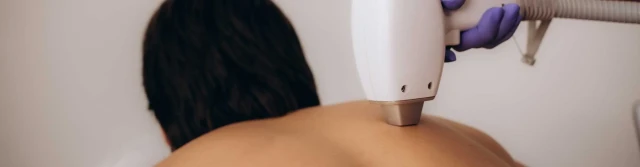
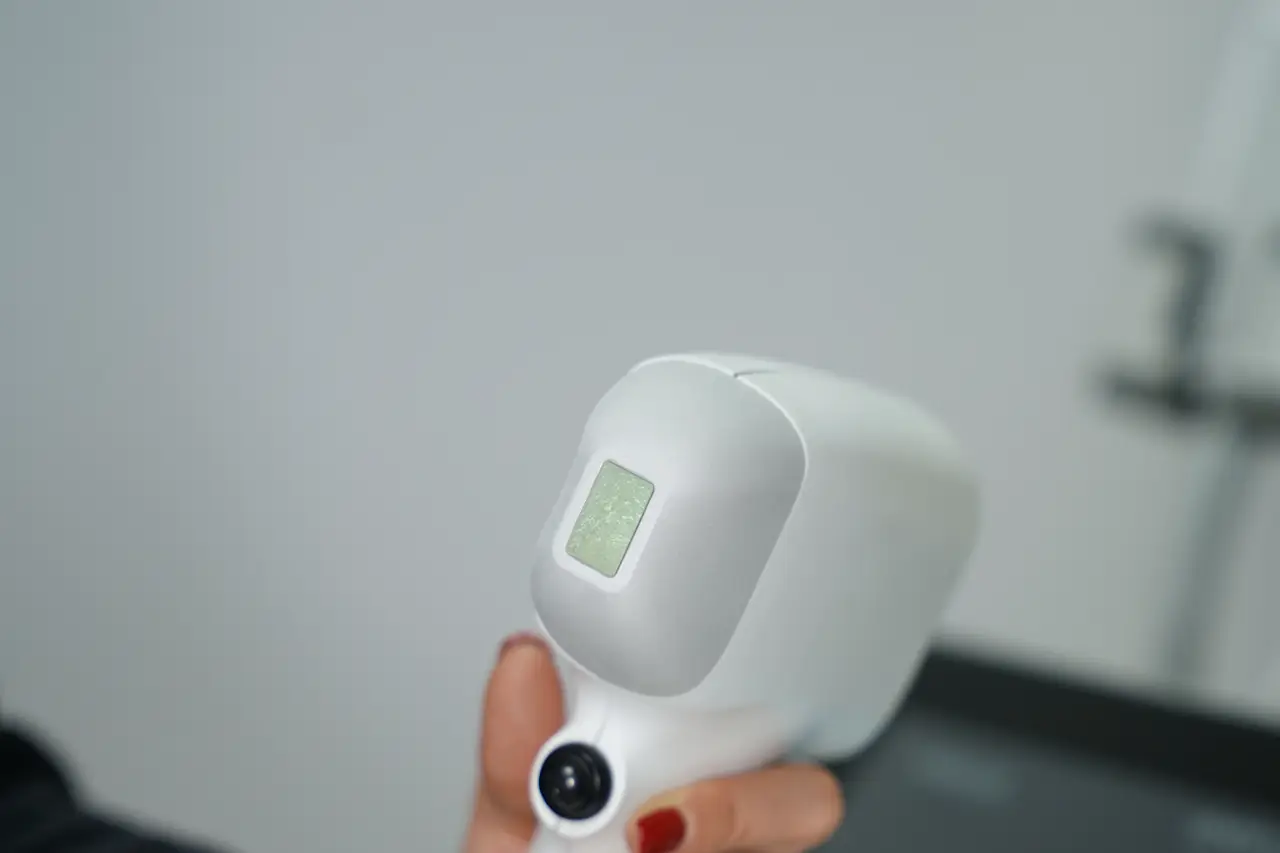
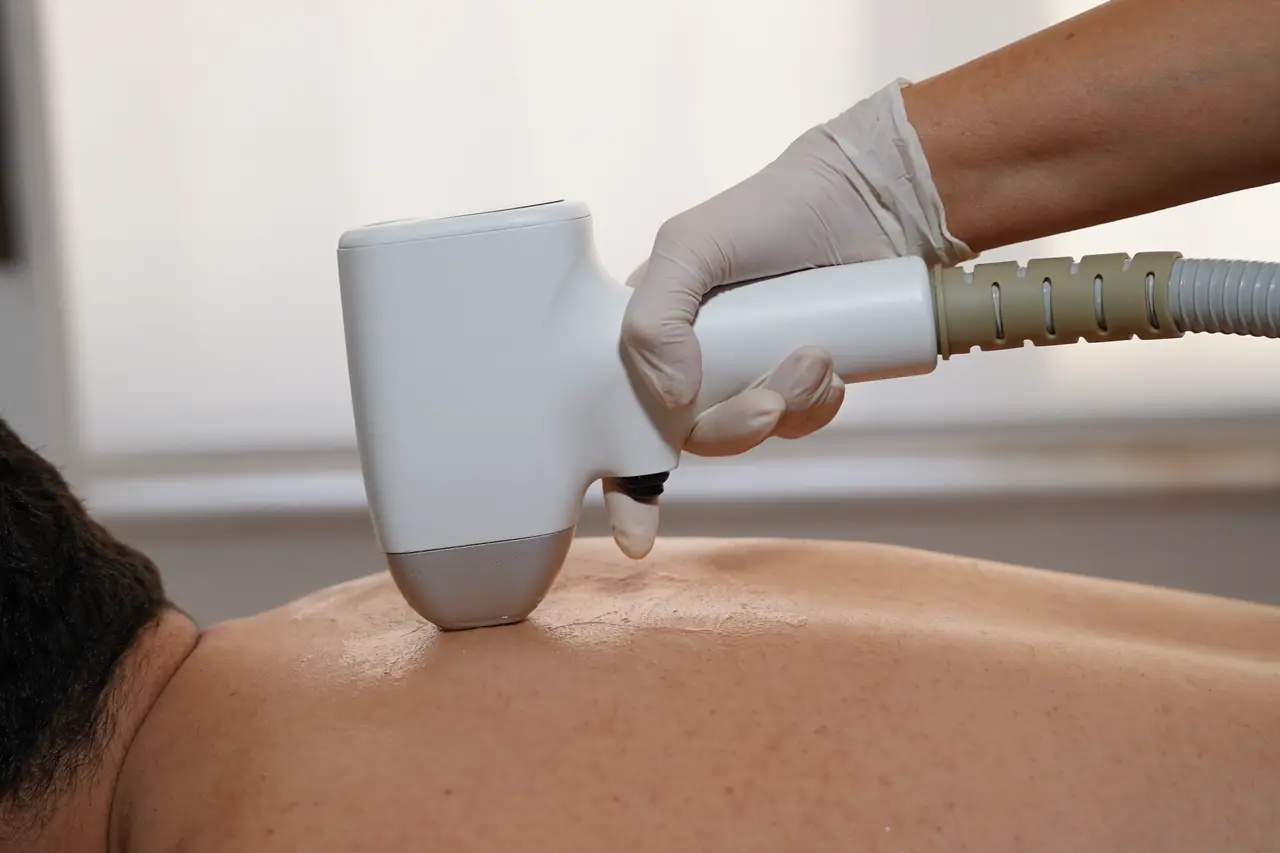
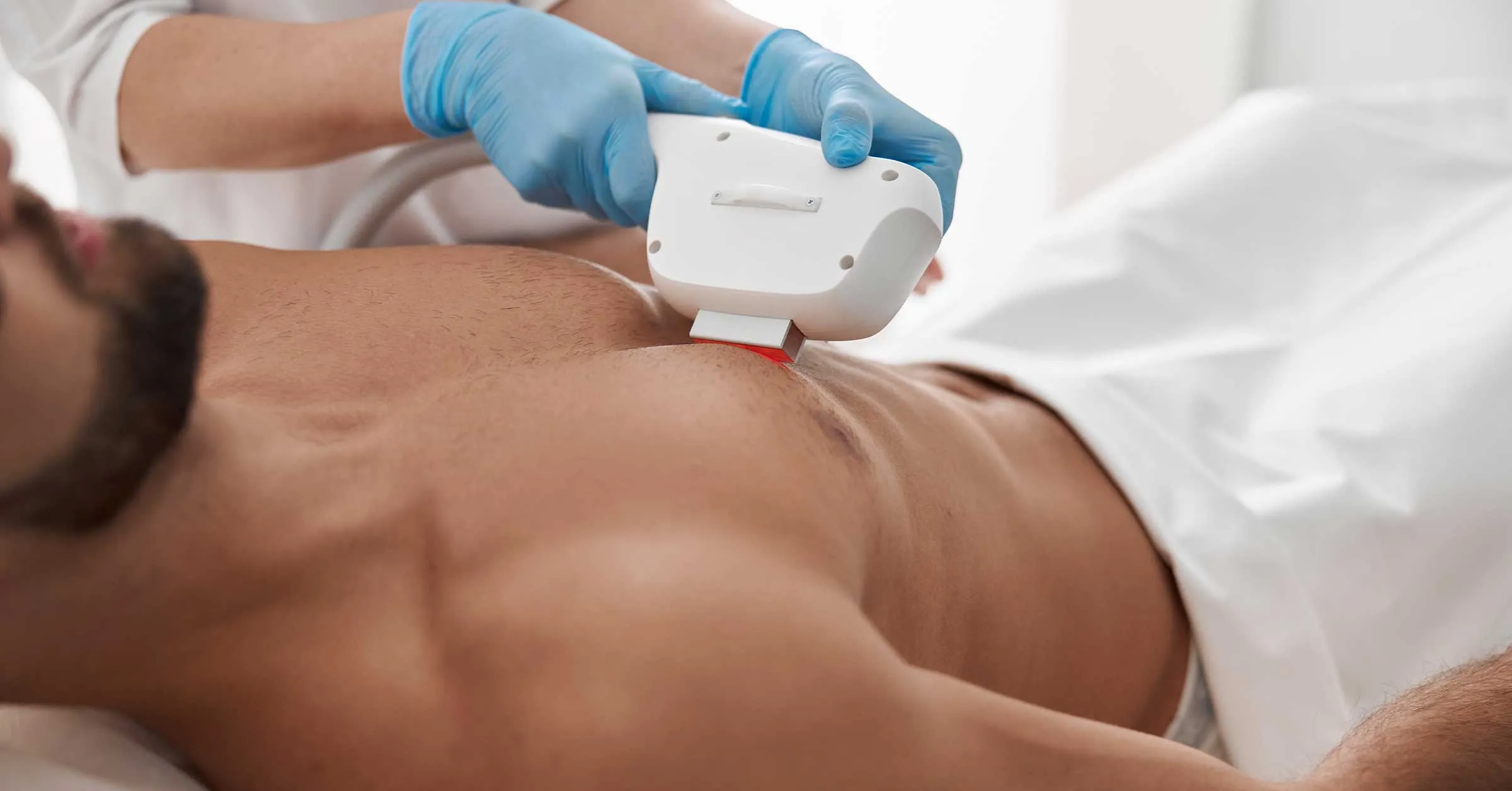
Male back laser hair removal is a comprehensive men's grooming treatment that uses Megatron 4D Diode quad-wavelength ice laser technology to progressively reduce dense, coarse hair across the upper, mid, and lower back. Because the back is nearly impossible to reach on your own—and because waxing or shaving thick back hair frequently triggers painful folliculitis (back breakouts), ingrown hairs, and prickly regrowth—laser hair removal is the most effective long-term solution. At Renew & Revive, located at Abide-i Hürriyet Caddesi No:141 in Şişli, Istanbul, we use the large 4 cm² Quattro sapphire applicator for fast, even, and comfortable back sessions.
How Male Back Laser Hair Removal Works & Key Benefits
Skin on the male back is thicker than on most other body areas, and its hair follicles sit deep within the dermis. Our Megatron 4D Diode system simultaneously delivers Alexandrite (755 nm), Diode (810 nm), and Nd:YAG (1064 nm) wavelengths to reach these deep roots effectively:
- Deep Follicle Penetration: Combined 810 nm Diode and 1064 nm Nd:YAG wavelengths penetrate thick back skin to target deeply anchored male hair roots.
- Sapphire Contact Cooling: An in-motion sliding technique paired with a sapphire contact-cooling tip greatly reduces the snapping sensation of traditional lasers, feeling like a cooled massage.
- Clearer Skin & Less Sweat Irritation: Reducing dense hair coverage minimizes trapped sweat during workouts and clears recurrent back bumps and folliculitis.
- Seamless Upper-Body Blending: Can be paired with male shoulder, nape, and lower back / coccyx laser hair removal for natural, line-free transitions.
Session Process, Duration, and Scheduling
Before scanning, your specialist evaluates your back hair density and skin tone, covers any moles or tattoos with white barrier pencils or protective tape, and assists with touching up hard-to-reach spots before gliding the cooled applicator across a structured grid.
- Session Duration: Thanks to the wide Quattro spot size, treating the entire back takes approximately 25–35 minutes.
- Number of Sessions & Intervals: Depending on hair thickness and growth cycles, 6 to 10 sessions spaced 6–8 weeks apart achieve either near-complete smoothness or natural density reduction.
What to Expect and What Not to Expect
Here is what to realistically expect from your male back laser hair removal program:
| What to Expect (Realistic Outcomes) |
What Not to Expect (Common Myths) |
| Shedding of treated hairs 10–14 days after each visit, followed by finer, lighter, and sparser regrowth. |
Complete, permanent elimination of all back hair after just one single session. |
| Significant reduction in back breakouts, waxing rash, and ingrown hairs. |
Laser response on white, grey, or non-pigmented hairs that lack melanin. |
| Effortless year-round grooming on an area you cannot easily reach yourself. |
High-energy laser application on freshly sunburned or newly tanned beach skin. |
Pre-Care and Post-Care Guidelines
Before Your Session:
- Avoid waxing, plucking, or using depilatory creams on your back for 3–4 weeks prior to treatment.
- Trim or shave reachable areas 24–48 hours before your visit (our specialist can assist with unreachable mid-back spots prior to scanning).
- Avoid direct sun exposure and tanning beds for 10–14 days before your appointment.
After Your Session:
- Avoid hot showers, steam rooms, saunas, Turkish baths, and heavy workouts that cause intense back sweating for the first 24–48 hours.
- Wear clean, breathable cotton t-shirts rather than tight synthetic gym shirts, and skip back scrubs or loofahs for 48 hours.
- Apply broad-spectrum SPF 50+ sunscreen whenever your back is exposed to sunlight at the pool or beach.
Related Male Body Grooming Services
Explore our complementary men's laser and back-care treatments in Şişli:
Disclaimer: This content is provided for aesthetic and personal grooming information purposes only and does not constitute medical diagnosis or treatment.
Sources and further reading
This page is for general information and does not replace medical advice. The sources are for readers who want to learn more.