Blogs
Facial Laser Hair Removal for Women: Upper Lip, Chin and Sideburns
Contents
Short answer: Facial hair in women (upper lip, chin, sideburns, neck) can be clearly reduced with laser hair removal. Because the face is one of the most hormone-sensitive areas, sessions are spaced more closely than on the body, and occasional top-ups may be needed once the plan is complete. Dark, coarse hair makes results easier; fine vellus hair and white hair respond poorly. If hair growth starts suddenly or increases quickly, see a doctor before starting laser.
Why Facial Hair Is Different
Some facial hair in women is fine, light vellus hair; some is coarser, darker “terminal” hair that has thickened under the influence of hormones. Hair on the chin, under the chin and on the upper lip is particularly sensitive to androgens. That is why changes in facial hair are common during puberty, pregnancy, after childbirth and around menopause.
The good news for laser: hormone-driven hair is usually dark and coarse, so it responds well. The harder part is that as long as the hormonal stimulus continues, new hairs can appear over time.
Area by Area
Upper lip
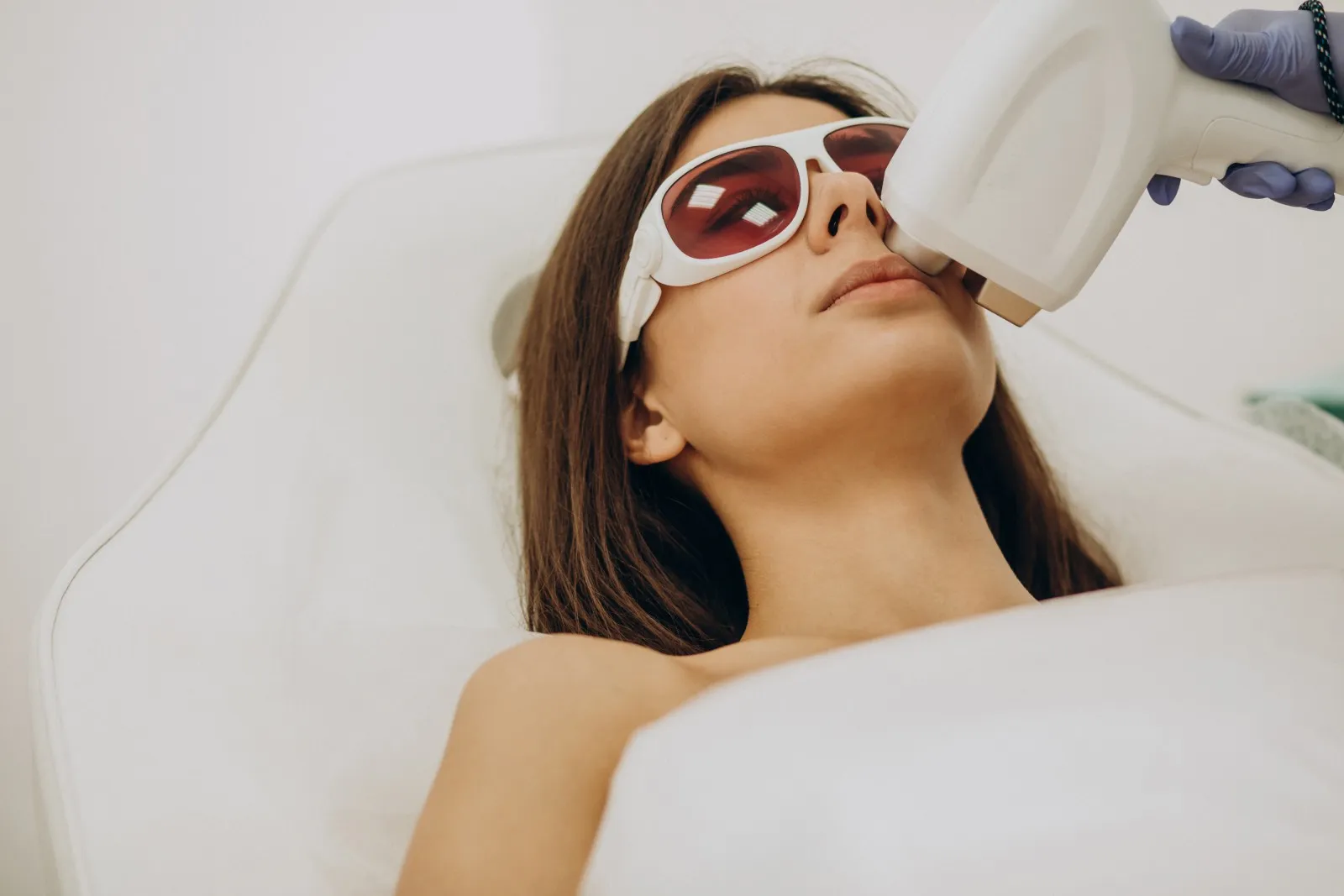
The most requested facial area. Hair is often fine but dark. The area is small so sessions are short; the lip line is sensitive, so it can feel a little sharper. Details: upper lip laser hair removal.
Chin and under the chin
This is where hormonal influence shows most. Hair can be coarse and deep-rooted, which helps it respond well to laser. Chin hair that is frequently tweezed often leads to ingrown hairs and dark marks; tweezing stops during a laser plan. Details: chin laser hair removal.
Sideburns and cheeks
Sideburn hair blends into the hairline, so setting the border correctly matters; we mark the areas you want to keep together before the session. Fine vellus hair on the cheeks responds poorly, and because some people have been reported to develop darker hair after laser on fine facial hair, we decide carefully about treating the cheeks.
Forehead, between the brows and neck
Small but visible areas; borders are agreed in advance so your brow shape is not affected. The neck and under-chin area can be planned together with the chin. For all facial options see women's facial laser hair removal.
How Many Sessions, How Far Apart?
The hair cycle on the face is shorter than on the body, so sessions are usually planned closer together. The total number depends on the area, hair density and hormones; the face often needs a few more sessions than the body. Once the plan is complete, a few top-ups a year may be needed for sparse new hairs driven by hormones. That does not mean laser has “failed”; it is simply how facial hair behaves.
When to See a Doctor First
If any of the following applies, we recommend seeing a doctor before starting laser:
- Hair growth started recently or is increasing quickly,
- It comes with irregular periods, persistent acne or noticeable hair loss on the scalp,
- You have noticed other changes such as a deepening voice,
- You have, or suspect, polycystic ovary syndrome (PCOS) or hirsutism.
In these cases the underlying cause needs to be assessed. Alongside medical follow-up, laser hair removal can be a supportive way to manage the visible hair.
Things to Keep in Mind
- Stop tweezing and waxing: laser targets pigment in the root; it cannot act on hair that has been pulled out. Between sessions, only shave or trim.
- Sun protection: the face is always exposed, so use a high-SPF sunscreen every day before and after sessions.
- Pause active ingredients: stop retinol, acids and exfoliants for a few days before and after.
- Make-up: come with clean skin and skip make-up for a few hours afterwards.
- Cold sores: if you often get cold sores around the lips, mention it at the consultation; we do not treat the area during an active outbreak.
Hair Colour and Skin Tone
Dark facial hair responds well, while blonde, red and white hair responds poorly, which is why starting before greying sets in is an advantage. We explain this in laser on blonde, red or white hair. For why longer wavelengths matter on darker skin, read laser hair removal for darker skin.
Facial Laser at Our Salon
We use the Megatron 4D Diode ice laser, combining 755, 808, 940 and 1064 nm. Settings are adjusted to hair thickness and skin tone, and sapphire contact cooling adds comfort on the sensitive upper lip. The first step is a free hair analysis and patch test. Wondering how it feels? See does laser hair removal hurt.
This content is for general information and is not medical advice. If you suspect hormonal hair growth, PCOS or hirsutism, consult your doctor first. Results vary from person to person.
Frequently Asked Questions
Answers to the most frequently asked questions about this content
How many sessions does upper lip laser take?
It depends on hair density and hormones; the face often needs a few more sessions than the body, spaced closer together. Your plan is set at the hair analysis.
Will chin hair grow back after laser?
The chin is hormone-sensitive. Hair reduces clearly after the plan, but sparse new hairs can appear due to hormones and may need top-up sessions.
Can I tweeze during a laser plan?
No. Laser targets pigment in the root and cannot act on hair that has been tweezed or waxed. Between sessions, only shave or trim.
Can fine facial hair be lasered?
Fine, light vellus hair responds poorly and darkening has been reported in some people, so treating areas like the cheeks is decided carefully.
When should I see a doctor first?
If hair growth started suddenly or is increasing fast, comes with irregular periods or persistent acne, or you suspect PCOS, a doctor's assessment is recommended before laser.