


Blog
Men s Laser Hair Removal: Complete Guide for Back, Shoulders & Neck
Personal grooming is a significant factor in enhancing quality of life for all genders. Male laser hair removal is increasingly chosen not only for aesthetic reasons but also for hygiene and to address skin issues like ingrown hairs. Unlike traditional hair removal, laser technology offers longer-lasting results alongside improved comfort and time savings.
Hair structure, follicle depth, and skin types differ in men compared to women. Therefore, the treatment process, devices used, and session planning require specialized expertise. Seeking professional care for hard-to-reach, extensive zones such as the back, shoulders, and nape is essential for effective outcomes and maintaining skin health. We adopt a personalized approach to provide accurate guidance throughout this process.
Overview of Laser Hair Removal in Men
Male laser hair removal aims to thin and reduce hair in areas with dense growth. Testosterone often makes male hair follicles thicker and placed deeper in the skin, necessitating the careful selection of laser energy levels and wavelengths. The goal is to reduce follicular activity without irritating the skin.
The first step is identifying the treatment areas and selecting the appropriate technology.
Laser hair removal for men is not merely cosmetic; it can also improve athletic performance or relieve issues such as excessive sweating and odor. Unlike female full-body treatments, men often prefer natural thinning rather than complete hair removal. Sharing these expectations with the specialist improves satisfaction rates.
Back Area Laser Hair Removal
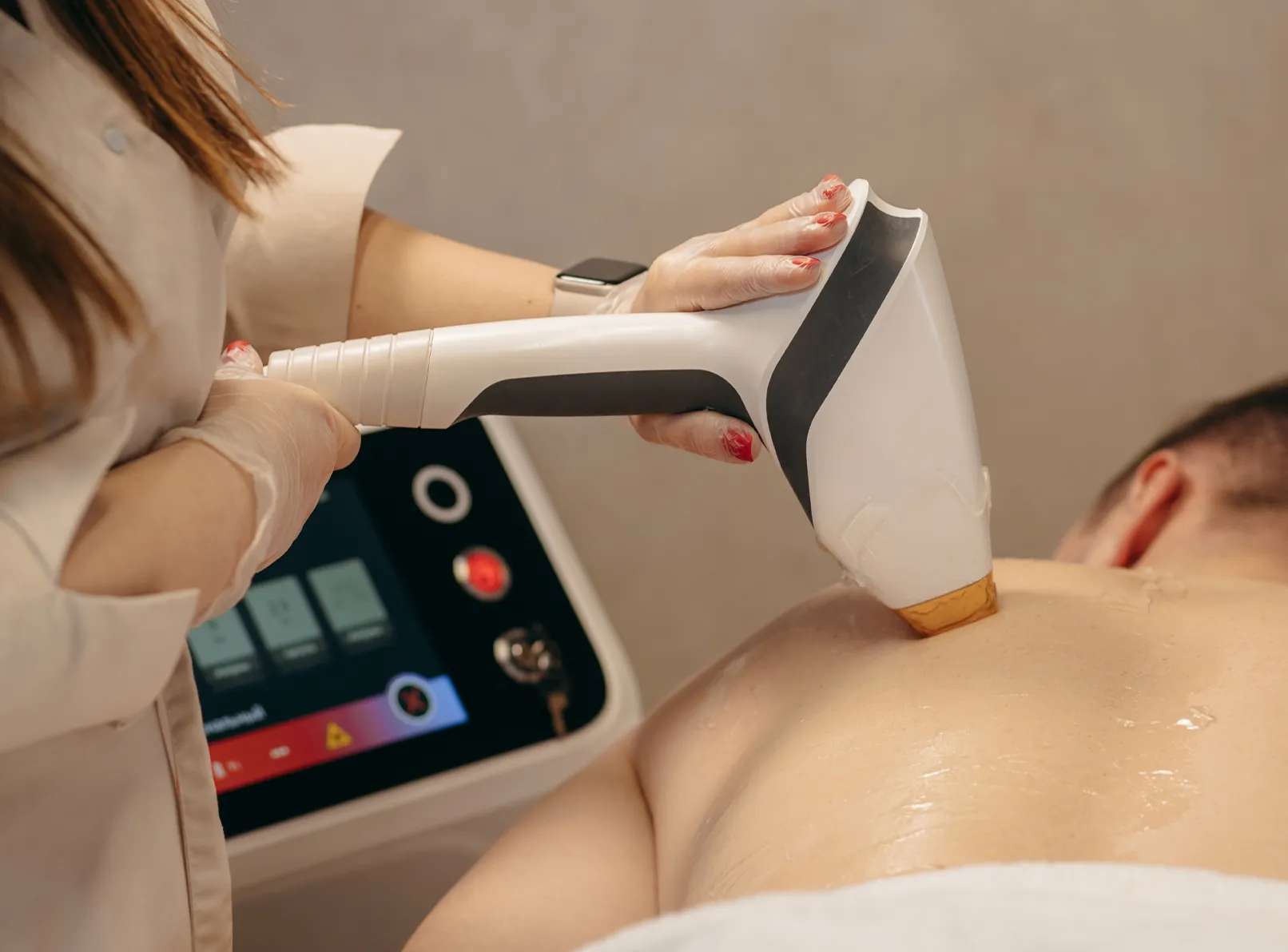
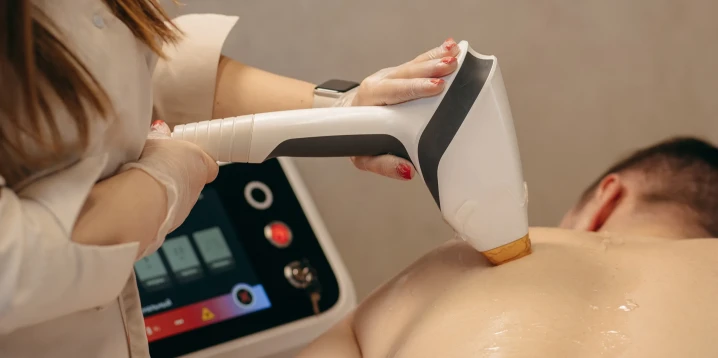
The back is one of the most densely hairy and difficult-to-manage areas for men. Due to its large surface, lasers with high scanning speeds and deep penetration are used. Our male back laser hair removal service targets thick, deeply rooted hairs, aiming to provide a comfortable experience.
Back treatments may take longer than other areas. Skin cooling during the procedure enhances comfort.
Shoulder Area Laser Hair Removal
Shoulders often connect with the back and nape and are more exposed to sunlight. Using laser tips adapted to the anatomical structure of the shoulders is crucial during male shoulder laser hair removal. Shoulder hair can sometimes be tougher or grow in various directions compared to the back.
A key consideration is sun protection before and after treatment due to sun exposure. Because laser treatment on tanned skin carries risks, session scheduling is often adjusted based on the individual’s vacation plans or seasonal conditions.
Nape Area Laser Hair Removal
The nape often affects aesthetics due to irregular hair growth after haircuts. The male nape laser hair removal helps create a cleaner hairline and reduces frequent trips to the barber. The skin here can be sensitive, and dense nerve endings may cause mild discomfort during treatment.
Since nape hairs are close to scalp follicles, defining treatment boundaries carefully is necessary. Proper planning ensures unwanted nape hairs are removed without damaging hair structure.
Laser Technologies Suitable for Men
Choosing the right laser technology based on male skin and hair type directly impacts results. Alexandrite, Diode, and Nd:YAG lasers each offer specific advantages depending on skin tone and hair thickness.
Generally, Alexandrite works well on light skin with dark hair, while Nd:YAG or Diode lasers are preferred for darker skin tones or deeply rooted hairs. Much like female back laser treatments (female back laser hair removal), the best outcomes in men are often achieved through hybrid or tailored approaches.
Treatment Process and Session Planning
Laser hair removal begins with a consultation and hair analysis. Due to men's hair growth cycles and hormonal factors, session numbers often differ from women’s. Typically, results become noticeable after 6 to 10 sessions, but individual variation exists. Intervals depend on hair growth speed, ranging from 4 to 8 weeks.
Clinic hygiene and professionalism are priorities.
Pre- and Post-Treatment Care
Success depends not only on the procedure but also on the client’s care at home. Hair should not be removed by waxing or tweezing before sessions—only trimmed. After treatment, soothing and protecting the skin is essential.
Using moisturizers post-treatment supports skin health. For those interested, treatments like dermaroller may improve skin quality after completion of laser sessions. These should not be performed concurrently with laser treatments and always require expert consultation.
Side Effects and Individual Variability
Laser hair removal is generally safe, though temporary side effects like mild redness and follicular swelling indicate effective treatment and usually resolve quickly. Rarely, pigmentation changes or crusting may occur, often due to insufficient sun protection after sessions.
Pain thresholds, skin reactions, and response times vary individually. Hormonal imbalances or certain medications may affect outcomes. It is crucial to share detailed medical history with your specialist before starting treatment.
Complementary Aesthetic and Care Treatments
Body care for men extends beyond hair removal. After achieving smooth skin, some may seek treatments to define body contours or reduce localized fat. For example, Magic Shape localized slimming treatment supports body shaping.
Similarly, G5 arm slimming massage can be preferred to tighten the arm area, while lymphatic drainage massage helps with fluid removal and circulation, contributing to healthier-looking skin after hair removal. These services complement a comprehensive personal care routine.
This content is provided for general informational purposes only and does not constitute medical advice, diagnosis, or treatment. Renew & Revive is not a healthcare provider and does not offer medical services. Results from laser hair removal and other aesthetic treatments may vary based on individual factors such as skin type, hair characteristics, and hormonal conditions. If you have any skin conditions or health concerns, it is advised to consult a qualified medical professional before undergoing any procedure. The information on this site is not a substitute for professional medical advice. Do not delay seeking medical care based on the content provided.
FAQ
Answers to the most frequently asked questions about this content
Which areas can laser hair removal be applied to for men?
For men, laser hair removal is commonly applied to the back, shoulders, neck, chest, arms, and legs. On the face, limited areas such as above the beard or cheekbones may be treated. The treatment plan is customized based on hair density and skin type.
Does laser hair removal hurt for men?
You may experience a mild stinging or burning sensation during laser hair removal. Modern laser devices use cooling systems to minimize discomfort. Pain tolerance varies by individual, but it is generally manageable. Topical anesthetic creams can be used if necessary.
How many sessions does laser hair removal take for men?
The number of laser hair removal sessions for men depends on hair color, thickness, skin type, hormonal factors, and the treatment area. Typically, it takes between 6 and 10 sessions. Sessions are spaced apart to align with hair growth cycles.
What should be considered after laser hair removal for men?
Mild redness or swelling after laser hair removal is normal. It’s important to protect your skin from the sun and avoid tanning beds and hot baths. Use moisturizers and soothing creams recommended by your specialist, and avoid any activities that might irritate the skin for a while. Follow your specialist’s instructions carefully.
Does laser hair removal provide permanent results for men?
Laser hair removal targets hair follicles to achieve permanent or long-lasting reduction in hair growth. Instead of complete removal, an 80-90% lasting reduction in hair density in the treated area is expected. Maintenance sessions may be required. Individual results vary, so consult a professional for detailed information.
