


Blog
Differences Between Male and Female Genital Laser Hair Removal: A Detailed Guide

Laser hair removal is increasingly popular for personal grooming regardless of gender, offering a comfortable and hygienic lifestyle. However, biological and structural differences play a critical role in shaping the differences between male and female genital laser hair removal treatment protocols. While both men and women seek smooth skin, factors like anatomy, hormonal balance, and hair characteristics require different planning approaches.
At Renew & Revive, we believe personal care should be customized. This guide explores the primary differences in genital laser hair removal procedures for men and women, treatment management, and essential considerations. Our goal is to provide accurate information to help you manage your expectations responsibly in this delicate topic.
Introduction: Gender-Based Differences in Genital Laser Hair Removal
Laser hair removal targets hair follicles to achieve long-lasting results. However, its application adapts to physiologic gender differences. Among both men and women, preferences for genital area aesthetics and hygiene dictate varied energy settings, session intervals, and other parameters. Although the fundamental principle remains—laser light absorbed by melanin converts to heat, damaging follicles—practical application differs by gender. Understanding these variations helps clients prepare better for the treatment process.
Anatomical Differences and Treatment Areas
The most distinctive differences in genital laser hair removal stem from anatomical variations impacting treatment zones. Male and female anatomy affect how the laser applicator maneuvers and the surface area to be treated.
For women, treatment generally covers the bikini area and the entire genital region, whereas for men, it includes the scrotum, base of the penis and surrounding area, as well as the groin. The more contoured and textured skin of the male genital area often requires the practitioner to use skin stretching techniques more intensively. Our male genital laser hair removal service is carefully planned considering these anatomical details. Similarly, the female genital laser hair removal procedure respects the aesthetic boundaries required by female anatomy. In both cases, the objective is to uniformly cover all contours and surfaces for even results.
Hair Density, Thickness, and Hormonal Effects
Hair texture and hormonal factors significantly influence laser hair removal effectiveness. Men typically have thicker, darker hair follicles that are deeper due to higher androgen levels. This intensifies laser absorption but can also increase the heat sensation during treatment.
Women usually have finer hair, but hormonal cycles (menstruation, pregnancy etc.) may affect hair growth patterns. Notably, the dense hair follicle population encountered in male laser hair removal treatments requires optimizing device settings towards higher energy output (fluence). These hormonal and structural differences mean men often require more sessions than women. The continual stimulation of new hair growth by testosterone highlights the importance of maintenance sessions for men.
Session Duration and Number Comparison
The size of the anatomical area and hair density directly impact session length and overall treatment time. Typically, the male genital area is broader, potentially lengthening individual session duration.
Women generally experience shorter sessions, whereas detailed scanning requirements may prolong sessions for men. In terms of total sessions, women usually achieve satisfactory results within 6–8 sessions, while men may require 8–10 or more. Among female hair removal methods, laser is noted for speed and comfort, but male clients should be aware the process may demand more patience.
Device Selection and Applicator Types: Gender-Specific Adaptations
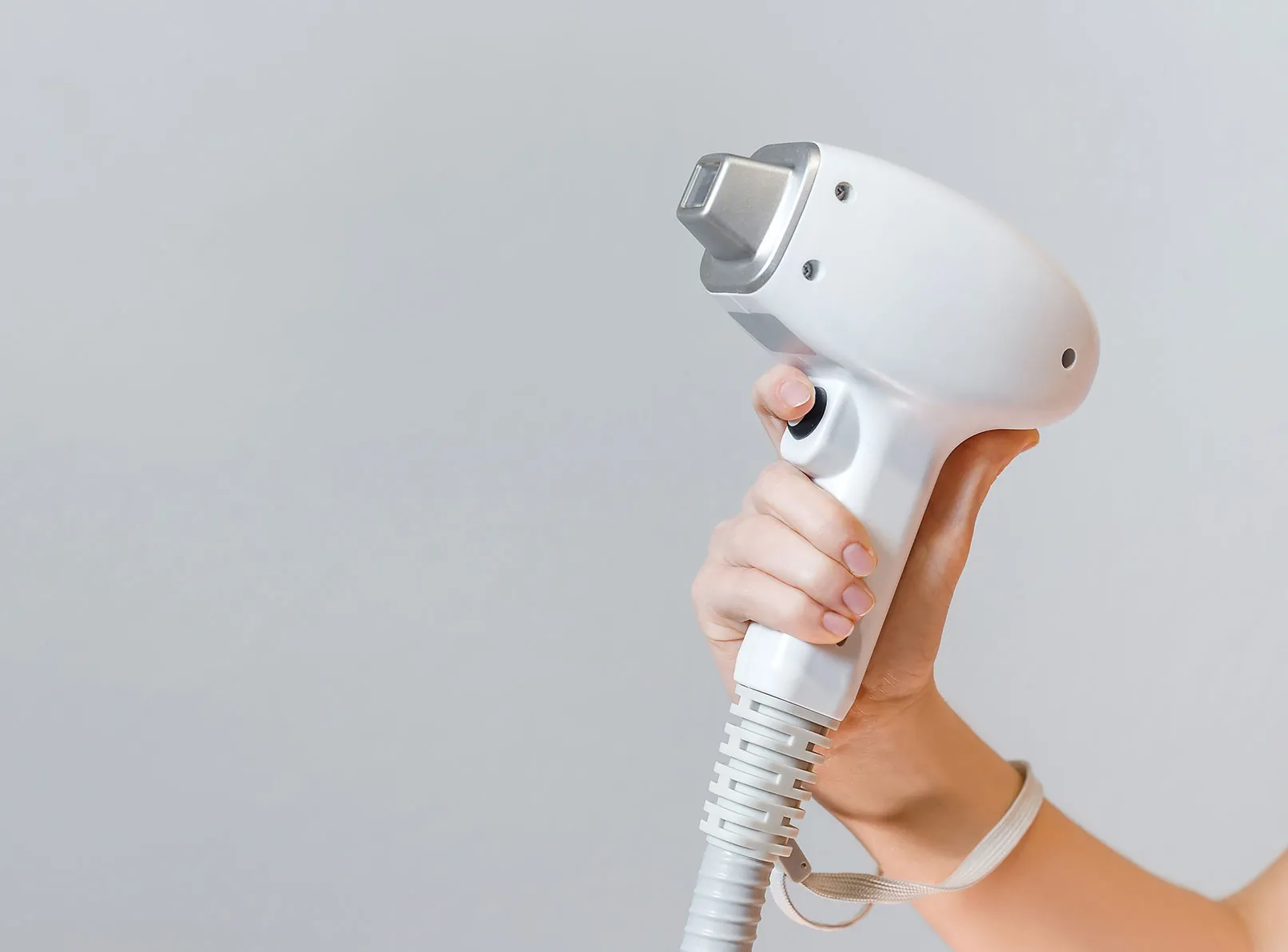
Laser technologies such as Diode, Alexandrite, and Nd:YAG are common to both genders; however, device and applicator choices depend on skin type and hair characteristics.
For men, deeper and thicker hair follicles often call for Nd:YAG lasers or Diode lasers with strong absorption capabilities. Women’s skin tone and finer hair qualities often suit Alexandrite lasers more frequently. However, the best method selection involves consulting a specialist, as covered in choosing the right laser method. Hygiene protocols for genital treatments include using personalized applicator tips or non-contact air-cooled systems, a standard procedure for both men and women.
Comfort, Sensitivity, and Pain Management
The genital area is among the most sensitive on the body, and pain perception varies individually. Generally, men may feel more sensitivity during laser pulses due to higher hair density and resulting heat.
Modern cooling systems (ice tips, air cooling) minimize discomfort. Women’s skin sensitivity may increase before and during menstruation, so scheduling appointments outside these periods is advised. When considering laser hair removal options, device cooling capacity is a key factor. Instant cooling technologies make treatments significantly more tolerable for both male and female clients.
Pre- and Post-Treatment Care: Gender-Specific Considerations
Success of laser hair removal depends not only on the treatment itself but also on the care before and after. Maintaining skin barrier integrity and preventing infections require strict hygiene adherence.
Both genders should trim hairs with a razor 24 hours before treatment. Men must be extra cautious shaving the scrotum area due to thinner, lax skin to avoid cuts. Post-treatment routines include avoiding tight clothing, hot water exposure, and moisturizing the skin. Additionally, men should avoid intense physical activity that causes heavy sweating for 1–2 days after treatment.
Professional Support and Safe Application Recommendations
Procedures on sensitive areas like the genital zone must be performed by trained professionals. Incorrect energy settings or faulty practice can cause burns or pigmentation issues. Hence, it is essential to inquire about clinic hygiene standards, device technology, and staff experience.
At Renew & Revive, we conduct thorough skin and hair analyses prior to treatment and manage expectations realistically. Your safety and health always take priority over aesthetic concerns.
Conclusion and Disclaimer
Although male and female genital laser hair removal treatments rely on the same foundational technology, significant procedural differences exist. Anatomy, hair characteristics, and hormones influence the number of sessions and treatment durations. Awareness of these differences and professional management by an expert team are key to achieving optimal results.
This content is provided for general informational purposes only and does not constitute medical advice, diagnosis, or treatment. Results of laser hair removal may vary from person to person. For any health concerns or questions, please consult a dermatologist or a qualified healthcare professional. Renew & Revive assumes no responsibility for the use or misuse of the information provided. Do not delay seeking professional medical care based on this content.
Frequently Asked Questions
Answers to the most frequently asked questions about this content
What are the main differences between male and female genital laser hair removal?
Differences arise from anatomical structure, hair density, hormonal variations, and sensitivity levels. These factors impact device choice, session length, and total session count.Differences arise from anatomical structure, hair density, hormonal variations, and sensitivity levels. These factors impact device choice, session length, and total session count.
Do genital laser hair removal session lengths differ by gender?
Yes, men usually have broader treatment areas and denser hair, leading to slightly longer sessions compared to women. Individual factors may vary.Yes, men usually have broader treatment areas and denser hair, leading to slightly longer sessions compared to women. Individual factors may vary.
Is genital laser hair removal more painful for men?
Pain tolerance varies individually. Men may experience more sensitivity due to thicker and denser hair follicles. Modern cooling technology helps improve comfort.Pain tolerance varies individually. Men may experience more sensitivity due to thicker and denser hair follicles. Modern cooling technology helps improve comfort.
Are there gender-specific preparations for genital laser hair removal?
Both genders need to cleanse skin and shave hair (with a razor) before sessions. Men’s thicker hair structure and women’s menstrual cycle sensitivity should also be considered.Both genders need to cleanse skin and shave hair (with a razor) before sessions. Men’s thicker hair structure and women’s menstrual cycle sensitivity should also be considered.
Which laser devices are used for genital hair removal, and do choices differ by gender?
Common devices include Diode, Alexandrite, and Nd:YAG lasers. Device selection depends more on skin type and hair characteristics than gender. Applicator choice varies according to area sensitivity.Common devices include Diode, Alexandrite, and Nd:YAG lasers. Device selection depends more on skin type and hair characteristics than gender. Applicator choice varies according to area sensitivity.
