


Blog
Men’s Laser Hair Removal: Procedure, Pain & Technology Guide
Personal grooming has become as important for men as it is for women today. Traditional shaving methods often cause time loss, skin irritation, and ingrown hairs, leading men to seek more lasting and comfortable solutions. In this context, men’s laser hair removal has grown popular due to its long-term convenience and aesthetic results.
Modern aesthetic technologies are designed keeping in mind that men’s skin structure and hair follicles differ from women’s. Devices optimized for thicker hair and deeper roots enhance effectiveness while prioritizing comfort. In this guide, we will explore how the laser hair removal process works, the technologies involved, and what you can expect during treatment in detail.
What Is Men’s Laser Hair Removal?
Men’s laser hair removal operates on the principle that concentrated light energy (laser) is absorbed by the melanin pigment in hair follicles, converting it into heat that damages the follicle. This process aims to weaken or completely stop hair regrowth. Given that men’s hair follicles are usually deeper and hair strands coarser, the wavelength and energy levels are adjusted according to these anatomical characteristics.
How Is Laser Hair Removal Performed on Men?
Laser hair removal requires professional planning and meticulous execution. The entire process—from preparation to post-treatment care—should be viewed as an integrated whole. Each step influences the final outcome quality and skin health.
Pre-Treatment Preparation
A successful hair removal process starts with proper preparation. Avoid waxing or tweezing methods that remove hair from the root at least 3-4 weeks before the session, as the laser targets the hair follicle. The treatment area should be free of sun exposure and tanning to reduce the risk of burns and enhance effectiveness. For detailed guidelines, see our article on Key Considerations in Men’s Hair Removal.
Treatment Process
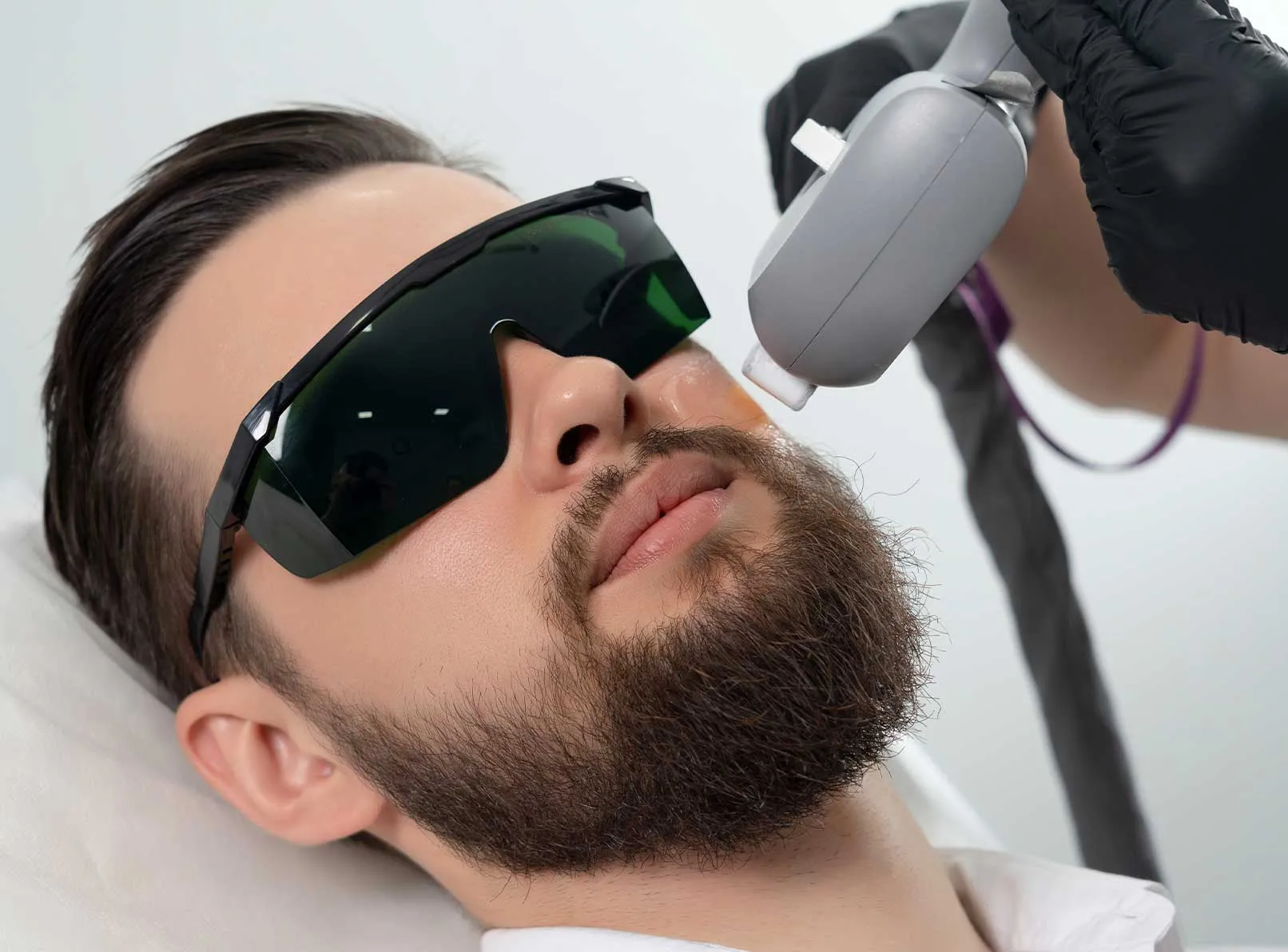
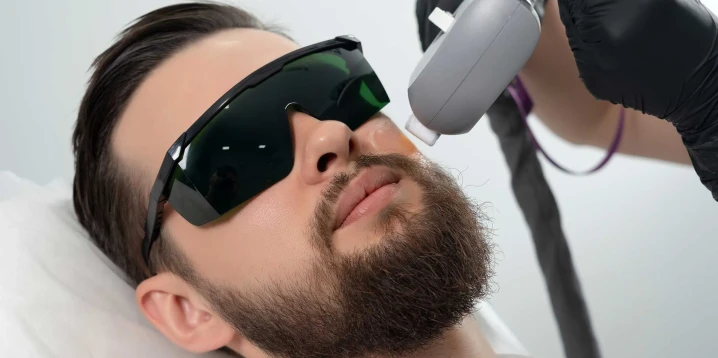
On the day of treatment, the hair on the target area should be shaved or trimmed close to the surface. The specialist selects the appropriate device head based on your skin type and hair structure. Cooling gels or built-in cooling systems in the device prevent overheating and improve comfort. The laser handpiece is moved across the skin while delivering pulses.
Post-Treatment Care
Mild redness or sensitivity is common after the procedure and usually subsides within a few hours. Avoid hot showers, saunas, and vigorous exercise for the first 24 hours. Moisturizing the skin and protecting it from the sun accelerate recovery. For more detailed care tips, refer to our Pre- and Post-Laser Hair Removal Care Guide. Medical skincare options for soothing and skin renewal after treatment are also available; see Post-Procedure Medical Skin Care.
Does Men’s Laser Hair Removal Hurt?
Many men’s primary concern with laser hair removal is pain. The sensation is often described as a light snap or mild stinging on the skin. However, advanced technologies, especially those with cooling tip systems, minimize discomfort significantly. Pain tolerance varies individually, and denser hair in men may increase sensitivity during initial sessions. As hairs thin and reduce, discomfort noticeably decreases in subsequent treatments.
What Technologies Are Used? (Cooling Laser, Diode, etc.)
The technologies used in men’s laser hair removal differ by wavelength and application methods. One of the most commonly preferred methods is Diode Laser technology. Diode lasers penetrate deeper skin layers, providing effective results on men’s deeply rooted hair follicles. The Smart Diode Cooling Laser technology features an integrated cooling system that reduces pain and offers a more comfortable experience.
Which Areas Can Men Have Treated with Laser Hair Removal?
Laser hair removal is safely applicable to almost any part of the male body. The most commonly treated areas include the back, shoulders, chest, and abdomen. Additionally, men’s beard laser hair removal is popular for refining uneven growth on the cheeks and neck.
Similarly, the nape area, which is difficult to shave and prone to irritation, can benefit from men’s nape laser hair removal for lasting smoothness. Large, hard-to-reach areas like the back are also often treated with men’s back laser hair removal, improving overall quality of life.
How Many Sessions Are Needed and How Long Do Results Last?
The effectiveness of laser hair removal depends on consistent session follow-up. Due to hormonal factors and higher hair density, men may require more sessions than women. Generally, noticeable results occur after 6 to 8 sessions, though stubborn areas like the back might need additional treatments. Maintenance sessions once a year help sustain the results.
Differences Between Traditional Hair Removal and Laser Hair Removal for Men
Traditional methods (shaving, waxing, depilatory creams) offer temporary solutions with quick hair regrowth and may cause irritation, cuts, and ingrown hairs. Laser hair removal targets the follicle to reduce hair quantity and thickness over time. Although the initial cost may seem higher, considering time and recurring expenses, laser offers a more economical and sustainable approach. For a deeper comparison, consult our article on Choosing the Right Hair Removal Method for Men.
This content is intended solely for general informational and awareness purposes. The information provided does not replace professional medical advice, diagnosis, or treatment. Results of laser hair removal and other aesthetic procedures may vary based on an individual's skin type, health condition, and hair characteristics. It is strongly recommended to consult a qualified professional before deciding to undergo any procedure. Renew & Revive offers beauty and care services in accordance with the laws of the Republic of Turkey and does not provide medical diagnosis or treatment services. For information about potential skin reactions or pigmentation issues following procedures, please refer to our page on [Pigmentation Repair Methods] or consult with our specialists. For any health concerns, please seek advice from your healthcare provider without delay.
Frequently Asked Questions
Answers to the most frequently asked questions about this content
Does laser hair removal hurt for men?
The pain felt during laser hair removal varies depending on the person's pain threshold and the area treated. Most describe the sensation as a mild stinging or brief burning feeling. Modern cooling laser technologies help minimize discomfort by cooling the skin's surface, making the procedure more comfortable.
How many sessions does laser hair removal take for men?
The number of laser hair removal sessions for men varies based on hair type, skin type, treatment area, and hormonal factors. Typically, visible results are seen after 6-8 sessions. However, areas with dense hair such as the back, or stubborn hair types, may require additional sessions.
Is laser hair removal permanent for men?
Laser hair removal targets hair follicles to significantly reduce hair growth over time. Although it cannot guarantee complete permanent removal, about 80-90% of treated hairs typically diminish, with remaining hairs becoming finer and lighter. Maintenance sessions once a year may be recommended to preserve results.
What should be considered before and after laser hair removal?
Before treatment, avoid sun exposure, tanning beds, and hair removal methods that pull hair from the root (such as waxing or tweezing). After treatment, it is important to moisturize the skin, use a high-SPF sunscreen, and avoid hot water on the treated area for the first 24 hours. Avoid using irritating cosmetic products.
Which areas can laser hair removal be applied to for men?
Laser hair removal for men can be safely performed on almost any part of the body including the back, chest, shoulders, arms, legs, underarms, neck, nape, and upper beard area (cheekbones). It should not be applied to sensitive areas very close to the eyes, such as the eye sockets or under the eyebrows.
